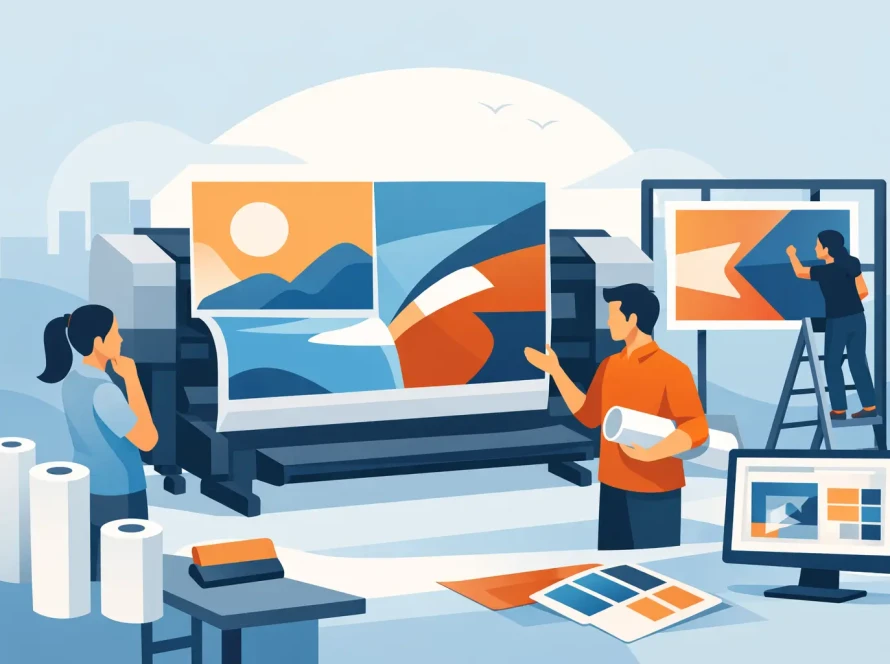
A new business rarely gets a second chance at its first local impression. A potential customer may see your postcard in the mail, grab your flyer at a community event, or walk past your storefront before they ever visit your website. The right print items for startups make those moments feel intentional: clear offer, recognizable brand, easy next step.
That does not mean ordering every product in a print catalog. Early-stage businesses need marketing materials that match how they sell, where customers find them, and what action they want people to take. Start with the pieces that help you get noticed, earn trust, and follow up consistently.
Start With the Customer Moment
Before choosing paper stock, sizes, or finishes, identify the moment your print piece needs to support. A home service company may need a door hanger or EDDM postcard that drives calls from nearby homeowners. A real estate team may need property flyers, yard signs, and branded presentation folders. A new café may benefit from window graphics, takeout menu inserts, and postcards that bring neighbors in for a first visit.
Print works best when it has one job. A postcard can introduce an offer. A brochure can explain a service with more detail. A business card can make the follow-up easy after a conversation. Trying to make one piece do all three often creates a crowded design and a message people skip.
Think about your sales path, too. If customers decide quickly, lead with a simple offer and a clear phone number, QR code, or website address. If your service requires trust and comparison, give prospects something they can keep, such as a brochure or booklet. The best choice depends on your buying cycle, not just what looks impressive.
Essential Print Items for Startups
Business cards that make follow-up simple
Business cards remain one of the most useful low-cost tools for founders, sales teams, service professionals, and anyone building referral relationships. They belong at networking events, front counters, client meetings, local sponsorships, and inside completed orders.
Keep the information practical. Your logo, name, role, phone number, email, website, and a direct next step are usually enough. If you serve a defined local area, include it. If you have one strong differentiator, such as same-day estimates or a new-client offer, use the back of the card for that message rather than packing it onto the front.
A heavier stock can signal quality for premium services, while a standard card stock is a smart fit for teams handing out cards at volume. The point is not to choose the fanciest option. It is to give people a card they will not lose, forget, or struggle to understand.
Flyers and brochures for explaining the offer
Flyers are built for speed. They work well for grand openings, seasonal promotions, neighborhood offers, service menus, and event announcements. A strong flyer uses a bold headline, one key image or visual, a benefit-focused message, and a clear call to action. It should be understood in seconds from a counter, bulletin board, door, or handout stack.
Brochures earn their place when customers need more context before they call or buy. A landscaping company can show service packages and project photos. A financial professional can explain specialties and appointment options. A nonprofit can share its mission, programs, and donation opportunities.
The trade-off is straightforward: brochures create more room for your story, but they require sharper organization. Do not turn a brochure into a wall of text. Use panels to guide readers from their problem to your solution, proof points, and contact information.
Postcards for local customer acquisition
For many new businesses, postcards are one of the most direct ways to put an offer in front of local households. They are visible immediately, easy to scan, and well suited to promotions that have a deadline or geographic focus.
Every Door Direct Mail, or EDDM, can be especially useful when your business serves specific neighborhoods. Instead of building a mailing list from scratch, you can target carrier routes around your location or ideal service area. This approach fits restaurants, fitness studios, dental offices, contractors, retail stores, real estate professionals, and other businesses that depend on nearby customers.
A postcard campaign needs more than attractive graphics. Give people a reason to act now. A new-customer discount, free consultation, limited-time offer, open house, or seasonal service reminder gives the piece purpose. Make the response path obvious, then plan how your team will handle calls, web inquiries, and walk-ins once the campaign lands.
Signs that make your business easier to find
Startup marketing should not stop at the mailbox. Your physical location, job sites, events, and vehicles can all create visibility. Banners, A-frame signs, window graphics, yard signs, table covers, and event tents put your brand in places where local customers already are.
For storefronts, window graphics can communicate your name, hours, services, and current promotion before someone reaches the door. For events, a branded table cover and banner create a more credible setup than loose materials on a plain table. For contractors and real estate teams, yard signs and site signage turn active projects and listings into neighborhood proof.
Large-format pieces need fewer words than most businesses expect. A person driving by or walking through an event has limited time. Prioritize your logo, the main message, and one contact method. If the sign requires a paragraph to explain itself, it is trying to do too much.
Build a Small System, Not a Pile of Materials
The smartest startup print strategy is coordinated. Your business card, postcard, brochure, and sign should feel like they belong to the same company. Use consistent colors, fonts, logo placement, photography style, and tone. When a customer sees your postcard and later encounters your booth or storefront, recognition does part of the selling for you.
A simple starter system might include business cards for direct conversations, flyers or brochures for detailed service information, postcards for local promotions, and one or two signs based on where you meet customers. Add letterhead, envelopes, notepads, or presentation folders when your proposals, onboarding packets, or client communications need a more polished look.
Avoid ordering huge quantities before you test the message. It can be tempting to print enough brochures for a year, especially when unit costs drop at higher volumes. But a startup’s pricing, services, branding, and offers can change quickly. Begin with a quantity that supports the next campaign, event season, or sales push. Reorder with confidence once the piece proves useful.
Get the Details Right Before Production
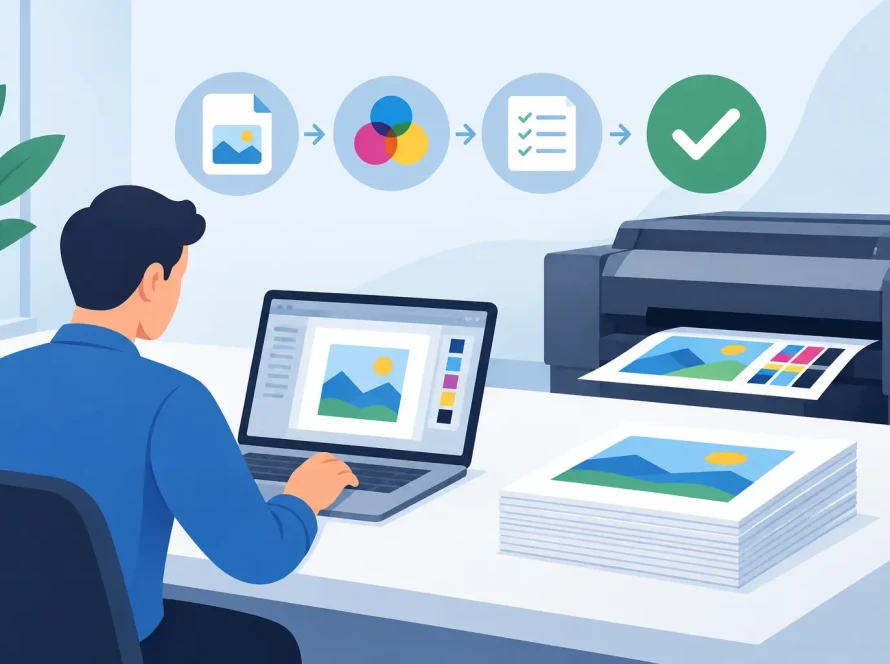
A strong design can still underperform if basic production details are missed. Review phone numbers, URLs, email addresses, offer expiration dates, service areas, and social handles carefully. One incorrect digit on a postcard can cost more than a reprint because it sends real prospects nowhere.
Images should be high resolution, particularly for brochures, banners, and signage. Colors may look different on a screen than they do on paper, so brand-critical projects benefit from guidance on stock, coating, and color expectations. Gloss can make product photos pop, while uncoated stock can feel more natural and may be easier to write on. There is no universal best finish. It depends on the purpose of the piece.
Also consider fulfillment early. If you need postcards printed, addressed, bundled, and mailed on a deadline, coordinating those steps through one experienced partner reduces handoffs and last-minute surprises. Pink Hippo can support standard print orders as well as more involved direct mail and large-format projects, helping growing teams keep production moving without managing multiple vendors.
Measure What Brings People Back
Print is easier to improve when you can connect it to a result. Use a campaign-specific offer code, landing page, QR code, dedicated phone extension, or ask-new-customers question at checkout. You do not need complicated reporting to learn which neighborhood, event, or offer produced calls and visits.
Keep notes on timing as well. A lawn care postcard may perform best before spring demand ramps up. A holiday retail flyer needs to reach households early enough for people to plan. An event banner should arrive with time for a setup check, not the night before the doors open.
Your first print order is not a permanent commitment. It is a practical test of what gets attention, starts conversations, and creates leads. Choose pieces that give your brand a professional presence now, then let real customer response tell you what to print next.