A business envelope gets seen before the letter, proposal, invoice, or offer inside it. That makes it more than office stationery. This commercial envelope printing guide helps you make practical choices that protect your brand, support efficient mailing, and give every customer communication a more professional finish.
Start With the Job the Envelope Needs to Do
The right envelope depends on what it carries and how it will move. A #10 envelope is the everyday standard for invoices, letterhead, statements, and sales letters. It fits a standard 8.5 x 11-inch sheet folded in thirds, making it the dependable choice for routine business correspondence.
For reply mail, a smaller #9 envelope often fits inside a #10 outer envelope. Catalog envelopes and booklet envelopes work better for materials that should not be folded, such as presentation folders, contracts, brochures, or promotional kits. These larger formats can make an offer feel more substantial, but they also raise postage and production costs.
Before ordering, confirm the dimensions of the insert, how many pieces will go inside, and whether the envelope will be hand-delivered or mailed. An envelope that is too tight can wrinkle inserts and create a poor first impression. One that is oversized may add unnecessary mailing expense.
Choose a Commercial Envelope Size and Style
Size is only part of the decision. The flap style and opening direction affect both appearance and workflow. Business envelopes typically have a diagonal or commercial flap. Booklet envelopes open on the long side, while catalog envelopes open on the short side.
Commercial flap envelopes are a smart default for everyday correspondence because they feed well through office equipment and look familiar to recipients. Catalog envelopes are often better for documents, reports, and event materials because the short-side opening helps keep larger inserts organized.
Window envelopes can save time when you are mailing statements, invoices, or letters generated from a database. The recipient address prints directly on the document and appears through the window. The trade-off is alignment: your letter template must be set up precisely so the full address remains visible and does not drift too close to the window edge.
Pick Paper That Matches Your Brand
Envelope paper affects how the piece feels, prints, and travels through the mail. A standard white wove stock is clean, professional, and easy to write on. It is a strong choice for law offices, service businesses, financial correspondence, and general office use.
Heavier stocks add a more premium feel for proposals, invitations, real estate packets, and high-value client communications. Smooth paper tends to show logos and fine type sharply, while textured or linen-like stocks create a more traditional presentation. Recycled papers can reinforce sustainability goals, though color consistency and print appearance can vary by stock.
Opacity matters when the contents are private. If statements, billing details, or sensitive documents may show through, choose an opaque stock or add a security tint. A security tint is a patterned interior that makes the contents harder to read through the envelope.
Paper choice also depends on the printer. Not every envelope stock runs well through every office machine, and some heavier or textured options are better suited to commercial production. Share your intended use before production so the material supports the job rather than complicating it.
Design for the Mailbox, Not Just the Screen
A sharp envelope design is usually simpler than a sharp brochure design. Your logo, return address, and brand colors should be easy to recognize at a glance. Crowding the front with too many messages, taglines, or graphics can compete with the recipient address and make the piece feel less polished.
Keep the mailing area clear. Postal equipment needs a readable recipient address, and space is often required for barcodes, postage, or indicia. If you are using bulk mail or direct mail services, the layout needs to follow mailing specifications before it goes to print. Designing first and checking later can lead to a redesign, delayed mailing, or added cost.
Leave a safe margin around edges, seams, and the flap. Small type placed too close to these areas can look uneven or become difficult to read. Avoid placing critical design elements on the flap crease, where folding may interrupt a logo or message.
Use high-resolution logo files and confirm that brand colors are built for print. Screen colors and printed colors do not always match exactly. A production-ready file gives your printer the best chance of producing consistent results across a short run of envelopes or a larger campaign.
One Color, Full Color, or a Custom Look?
Single-color envelope printing is a cost-effective choice for return addresses, black logos, and straightforward business correspondence. It works especially well when the envelope will be used frequently and needs to coordinate with letterhead, forms, or invoices.
Full-color printing gives you more room to use a brand palette, campaign imagery, or a bold promotional message. It can be a practical investment for direct mail, new customer offers, event invitations, and real estate marketing. However, full coverage backgrounds and heavy ink coverage require added care. Envelopes have seams, flaps, and uneven surfaces that can affect coverage, especially on dark colors.
For a premium look, consider a colored stock paired with one- or two-color printing. A kraft envelope with black ink can feel approachable and local, while a navy or cream stock can create a more formal effect. The best option depends on the audience and message. An accounting firm may benefit from restrained, familiar design, while an event venue or boutique can use more visual personality.
Plan for Mailing Before You Print
Envelope printing and mailing should be planned as one job. A beautiful piece that does not meet postal requirements can lose time at the finish line. If your envelopes will be used for a local campaign, account for postage placement, addressing, and any required barcode space during design.
For direct mail, decide whether you will preprint envelopes, print variable recipient addresses, or use labels. Preprinted envelopes are useful for recurring correspondence and can be stored for future use. Variable printing is more flexible for campaigns with personalized names, locations, or offers. Labels may work for a small internal mailing, but they can look less refined and create extra labor for larger quantities.
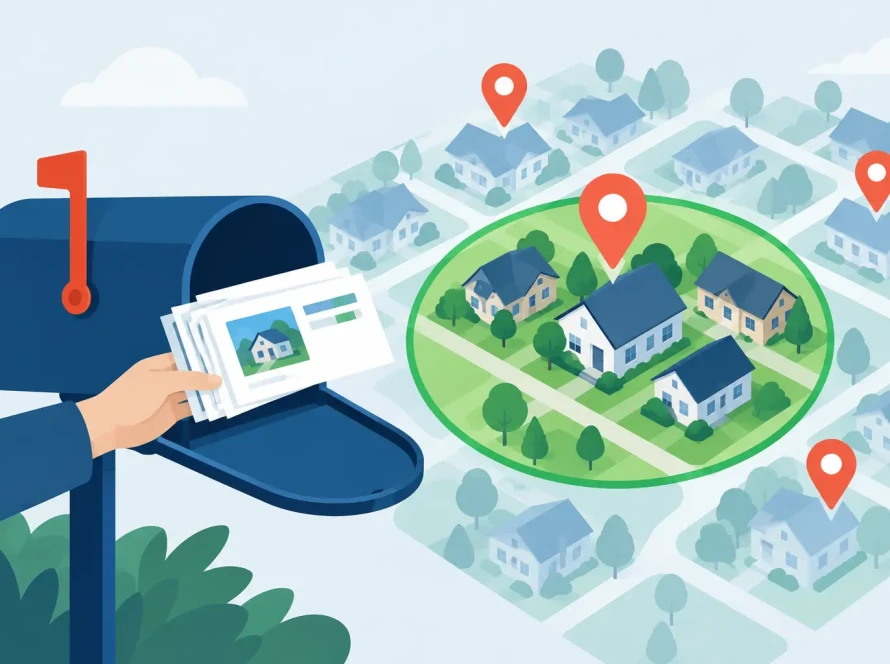
If you are mailing through Every Door Direct Mail, the format and mailing setup are different from an addressed campaign. EDDM can be an efficient way to reach neighborhoods without purchasing a mailing list, but the mailpiece must meet specific size, weight, and preparation requirements. Getting those details right early keeps the campaign moving.
Proof Carefully Before Production
Envelope errors are highly visible because the available design space is limited. Review spelling, phone numbers, web addresses, suite numbers, and logo placement. If you use a window envelope, test the inserted document to make sure the full address shows properly.
Request or review a proof before production, especially for new artwork, color-critical branding, or a large order. A digital proof helps catch content and layout errors. For complex colors, specialty stocks, or high-volume projects, ask what proofing options are available. The goal is not perfection for its own sake. It is preventing a preventable reprint when deadlines and postage are involved.
Order the Right Quantity
Envelope orders should reflect both immediate needs and realistic usage. Ordering a larger quantity often lowers the per-piece price, which makes sense for stable branding and recurring correspondence. But do not overbuy if your address, logo, phone number, or messaging may change soon.
For a campaign, order enough to cover the mailing quantity, internal use, replacements, and a small buffer for spoilage or last-minute additions. For everyday office envelopes, consider how quickly your team uses them and whether you need matching letterhead or other collateral at the same time. Coordinating these pieces creates a more consistent customer experience.
A capable print partner can help bring the design, production, addressing, and mailing pieces together. Pink Hippo can support straightforward envelope orders as well as larger direct mail projects where every detail needs to line up.
The best commercial envelopes do not demand attention with clutter. They make the sender recognizable, the recipient address easy to process, and the contents feel worth opening. Start with the purpose of the mailing, then let size, stock, design, and production choices work together from there.