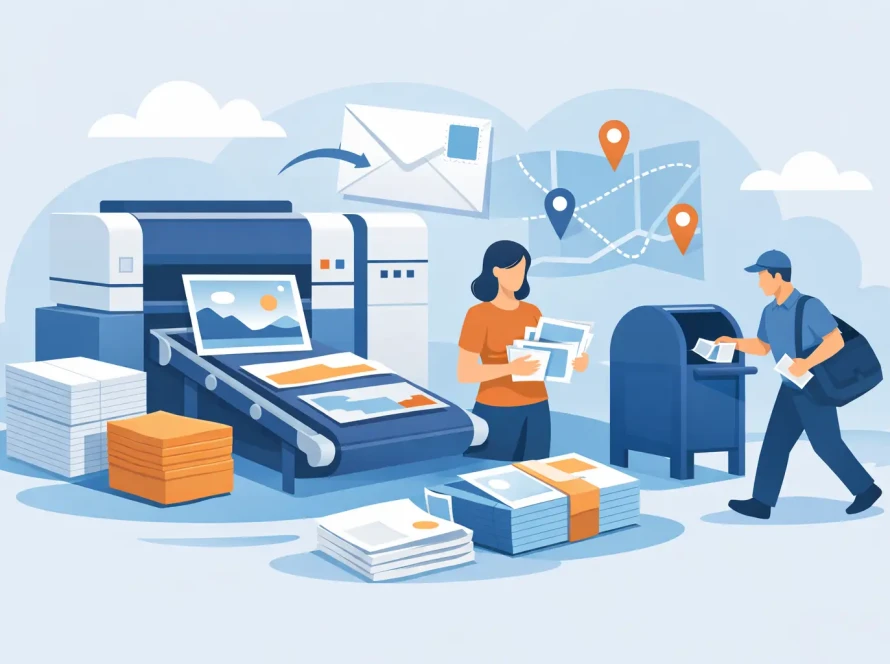
A grand opening offer, seasonal promotion, or new listing can lose momentum quickly when postcards arrive after the moment has passed. So, how long does postcard printing take? For many standard postcard orders, production takes two to four business days after final artwork approval. But if those postcards are headed to mailboxes, the full timeline also includes proofing, addressing, postal preparation, and USPS delivery.
The smart way to plan is to work backward from the date you want customers to receive your message, not the date you want to place the order. That gives your team room to review the details, make thoughtful choices about stock and finish, and avoid paying for a rush job that may not be necessary.
How Long Does Postcard Printing Take?
For a standard postcard with print-ready artwork, a typical production window is two to four business days. Simple, common sizes such as 4 x 6 inches, 5 x 7 inches, and 6 x 9 inches often move faster than highly customized pieces because the materials and production setup are more readily available.
That estimate begins after your file is approved for print. It does not necessarily include design work, revisions, shipping, or mailing. If your postcard needs custom finishing, specialty paper, variable data printing, or a large quantity, allow additional time.
A fast turnaround is possible when the artwork is ready, the mailing data is clean, and the job specifications are settled before production begins. Changes after a proof is approved can affect the schedule, especially when a campaign is coordinated with an event, sale, or local launch.
What Happens Before Your Postcards Are Finished?
Postcard printing is more than pressing print. Each production step protects the quality of the final piece and helps prevent expensive mistakes from reaching your audience.
File Review and Proof Approval
The first step is checking the artwork. Print files should have the correct size, bleed, resolution, color setup, and safe margins. Mailing postcards also need a clear area for the address, postage, and postal markings.
If a file is fully print-ready, review can be quick. If it needs edits, missing fonts, image replacement, or changes to fit postal requirements, the timeline can extend. This is one reason it helps to send postcard artwork early, even if you are still finalizing the delivery date.
Printing and Drying Time
Once approved, postcards are printed on the selected stock. Quantity, paper type, coverage, and press scheduling can all influence production time. A small batch of standard full-color cards may move through quickly, while a larger campaign may require more press time and handling.
Coated stocks and heavy ink coverage can also need appropriate drying or curing time before trimming and packing. Rushing this stage can compromise color, scuff resistance, or the clean finish your brand deserves.
Trimming, Finishing, and Quality Checks
After printing, postcards are trimmed to final size and inspected. Standard trimming is usually straightforward. Extra services such as rounded corners, spot UV, foil, die cuts, folding, or unusual shapes add production steps and can add days to the schedule.
Quality control matters most when your postcards represent a time-sensitive offer or a high-value brand. A sharp image, accurate color, clean cuts, and correct mailing details are worth checking before thousands of pieces move forward.
Printing Turnaround Is Not the Same as Mailing Time
If you are handing postcards out at an open house, placing them in welcome packets, or shipping them to your office, printing and delivery are the main timeline considerations. Shipping can add one to five business days depending on the service level and destination.
For direct mail, there is more to plan. After printing, postcards may need to be addressed, sorted, bundled, and prepared for postal acceptance. USPS delivery timing then varies by destination, local postal conditions, and the mail class used.
As a practical planning range, allow one to two weeks from final artwork approval to mailbox delivery for a straightforward direct mail campaign. Some projects can move faster, while larger campaigns or schedules involving multiple locations can take longer. If your postcard must land before a specific date, such as a grand opening or holiday sale, build in extra buffer time.
Every Door Direct Mail, or EDDM, can be an efficient option for reaching local neighborhoods without purchasing a mailing list. However, route selection, paperwork, printing, bundling, and post office drop-off still require coordination. Plan ahead if you want your campaign to cover a particular weekend or promotion window.
What Can Make Postcard Printing Take Longer?
Most delays are preventable. The following factors are the ones businesses should consider before setting a firm campaign date:
- Artwork that needs revisions, has low-resolution images, or does not meet bleed and mailing requirements
- Specialty paper, unusual sizes, custom die cuts, foil, spot UV, or other premium finishing choices
- Large quantities that require more press time, assembly, addressing, or postal preparation
- Mailing lists with duplicates, incomplete addresses, or formatting issues that need cleanup
- Orders placed around holidays, major events, or seasonal periods when print and postal volumes rise
None of these should stop you from creating an attention-grabbing postcard. They simply mean the project needs a realistic production schedule. A premium finish can be a smart brand investment. Just do not treat it like a next-day standard postcard order.
How to Keep Your Postcard Campaign on Schedule
Start with the mailbox date. If you want customers to receive a coupon by the first week of December, do not wait until the final week of November to begin. Give yourself time for artwork review, print production, mail preparation, and the normal variability of postal delivery.
Next, finalize the offer before design is approved. Confirm dates, phone numbers, website details, promo codes, addresses, and calls to action. A postcard is compact, so one incorrect detail can make the entire piece less effective. It is much easier to correct a proof than to reprint a completed campaign.
Keep the design focused, too. One clear offer and one clear next step usually perform better than trying to fit every service on a single card. A local roofer might promote a free inspection. A real estate agent might spotlight a just-listed home or a neighborhood market update. A restaurant might offer a limited-time lunch deal. The message should make sense at a glance.
For a direct mail project, provide your mailing list as early as possible. Address hygiene, duplicate removal, and postal formatting take time, and clean data helps protect your budget. If you are using EDDM, decide which neighborhoods or carrier routes you want to reach before artwork and quantities are locked in.
When a Rush Order Makes Sense
Rush postcard printing can be valuable when an opportunity is truly immediate: an event date changed, a sale was approved late, a listing just hit the market, or your business needs materials for a last-minute trade show. A responsive print partner can help identify the fastest practical path.
Still, the fastest option may require trade-offs. You may need to choose a standard size, a readily available paper stock, or a simpler finish. If direct mail is involved, even expedited print production cannot guarantee an exact USPS delivery date. For tight deadlines, consider combining mailed postcards with handouts, signage, door hangers, or digital promotion so your message reaches customers in more than one way.
Pink Hippo helps businesses coordinate print and mailing projects under one roof, which can reduce handoffs and make it easier to spot timing issues before they become campaign problems. The earlier you share your deadline and campaign goals, the more options you have.
Common Postcard Timing Questions
Can postcards be printed the same day?
Some simple, print-ready postcard jobs may qualify for same-day or next-day production, depending on quantity, stock availability, and the production schedule. Ask early, and be prepared to use standard specifications if speed is the priority.
How far ahead should I order postcards for an event?
For postcards you will hand out, aim to order at least one to two weeks ahead when possible. For mailed postcards, plan two to three weeks ahead of the desired in-home date. That buffer provides room for approval, production, mailing preparation, and postal movement.
Does a larger postcard take longer to print?
Not always. Common larger sizes can be produced efficiently, but they use more material and may affect postage or mailing format. Custom dimensions and specialty finishing are more likely to extend production than size alone.
A postcard campaign works best when the message, production plan, and delivery date are aligned from the start. Share your target in-home date early, approve every detail carefully, and give your marketing the time it needs to make a strong first impression.