A banner that curls at the edges, fades after a few weeks, or flaps so hard it becomes difficult to read is not a bargain. It is a missed marketing opportunity. This banner material comparison helps you choose a material that fits where the sign will hang, how long it needs to perform, and the impression your business needs to make.
For a grand opening, a property listing, a trade show, or a recurring storefront promotion, the right banner starts with more than artwork and size. Material affects color, readability, wind resistance, portability, and total value over the life of the sign. The best choice depends on the job.
Banner Material Comparison: Start With the Environment
Before choosing a banner stock, identify its working conditions. An indoor banner in a climate-controlled lobby has very different needs than a roadside banner facing sun, rain, and steady wind. Duration matters, too. A weekend event may call for a different solution than a seasonal promotion that will stay up for months.
Ask three practical questions: Will the banner be used indoors or outdoors? Will wind move through it or push against it? Does the design need photographic detail, refined texture, or simply bold information that can be read from a distance?
Those answers usually point you toward one of four common materials: standard vinyl, mesh vinyl, fabric, or canvas. Each has a strong use case, and each comes with trade-offs.
Standard Vinyl: The Dependable Outdoor Workhorse
Vinyl is the material most businesses picture when they think of a banner. It is durable, weather-resistant, easy to clean, and well suited to bold graphics. Standard vinyl works especially well for storefront promotions, construction signage, school events, sponsor banners, sales announcements, grand openings, and real estate marketing.
Because vinyl has a smooth, solid surface, it produces strong color and clear text. That makes it a reliable choice for logos, high-contrast calls to action, phone numbers, QR codes, and simple promotional messages. If you need a banner that will be seen from a parking lot or a busy street, vinyl gives you the visibility most outdoor campaigns require.
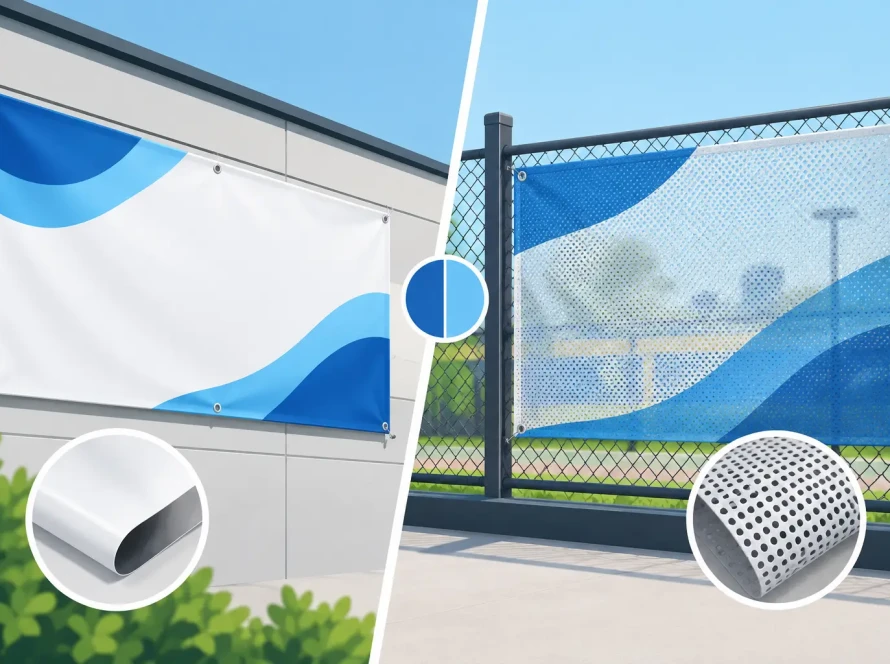
The trade-off is wind. A solid vinyl banner catches air. With proper finishing, reinforced hems, and correctly placed grommets, it can perform very well outdoors. But on a fence line, exposed building face, or other windy location, a solid surface may put more stress on the banner and its mounting hardware than you want.
Vinyl is often the practical choice when durability and price are your priorities. It is also a good fit when your campaign needs repeatable signage across multiple locations.
Best uses for standard vinyl
Choose standard vinyl for short- to medium-term outdoor displays, storefront windows and walls, indoor promotional signage, event branding, directional messaging, and banners with large type or high-impact color.
Mesh Vinyl: Built for Windy Locations
Mesh vinyl looks similar to standard vinyl at first glance, but the tiny perforations across its surface make a major difference. Air passes through the material instead of pushing directly against it. This reduces wind load and makes mesh a smart option for chain-link fences, outdoor stages, parking areas, athletic facilities, construction sites, and building wraps.
The holes are small enough that a design remains visible from normal viewing distance, especially when it uses larger lettering and clear graphics. Up close, however, mesh does not have the same solid, polished appearance as standard vinyl. Fine details and very small text can lose impact because of the perforated surface.
That trade-off is worth it when wind is the bigger concern. A banner that stays securely mounted and readable is more valuable than a higher-detail banner that strains in every gust. For fence banners, mesh also allows people on the other side to maintain some visibility through the material.
When designing for mesh, keep the message simple. Use bold fonts, strong contrast, and images that do not rely on tiny details. Your banner will work harder from the distance where most people will actually see it.
Fabric Banners: A Polished Choice for Indoor Events
Fabric banners bring a softer, more elevated look to indoor marketing. They are popular for trade show displays, conferences, step-and-repeat backdrops, retail interiors, presentations, photo areas, churches, schools, and corporate events. Fabric is lightweight, less prone to glare than vinyl, and easier to transport when an event team needs to pack and set up quickly.
For brands that want a refined visual presence, fabric can be the right call. It photographs well, which matters for events where guests, staff, or attendees will share images online. Colors can appear rich and professional, while the material itself feels less industrial than vinyl.
Fabric is not generally the first pick for a long-term outdoor installation. It can be suitable for limited outdoor use in favorable conditions, but weather exposure, moisture, and repeated handling should guide the decision. If the banner will live outside through changing weather, vinyl or mesh is usually the safer investment.
Fabric also benefits from thoughtful finishing. Pole pockets, hemming, or display hardware should match the way it will be installed. A banner that looks premium on the print table still needs the right setup to look polished in the room.
Canvas: When Texture Is Part of the Brand
Canvas offers a distinctive, textured finish that can make certain designs feel more artistic, warm, or high-end. It is often used for indoor displays, retail décor, gallery-style promotions, branded office environments, and designs where a textured surface supports the overall look.
This is not the material for every message. Canvas can soften the crispness of fine type and may not deliver the high-impact, high-gloss look some campaigns need. But for a boutique retailer, hospitality business, interior designer, or organization creating a more permanent indoor display, that texture can be a benefit rather than a limitation.
Think of canvas as a design-forward material. It works best when the visual style is intentional and the viewing experience is closer than it would be for a roadside banner. If your goal is to make a space feel branded rather than simply announce a sale, canvas deserves consideration.
Compare Banner Materials by Business Need
| Material | Best For | Key Advantage | Consider Before Ordering | | — | — | — | — | | Standard vinyl | Storefronts, promotions, outdoor events | Durable, vivid, versatile | May catch significant wind | | Mesh vinyl | Fences, exposed outdoor areas, construction sites | Wind passes through the banner | Fine details are less crisp | | Fabric | Trade shows, backdrops, indoor displays | Premium, low-glare appearance | Not ideal for long-term weather exposure | | Canvas | Interior décor, boutique displays, artistic branding | Textured, elevated finish | Not designed for distance viewing or harsh outdoor use |
Material selection should support the job, not complicate it. If you are promoting a weekend open house, standard vinyl may be all you need. If your real estate team is branding a fence around a development, mesh may protect the investment better. If your marketing team is preparing for a convention, fabric can help create a clean, professional backdrop.
Do Not Overlook Banner Weight and Finishing
Material is only one part of the order. Banner weight, hems, grommets, pole pockets, and mounting method influence how the finished piece performs. A heavier vinyl may feel more substantial and hold up well for demanding outdoor use, while a lighter option can be easier to handle for temporary displays.
Grommets are a common choice for hanging banners with rope, bungee cords, hooks, or zip ties. Spacing matters. Properly placed grommets help distribute tension instead of concentrating it in one corner. Hemmed edges add reinforcement, particularly for outdoor banners and larger sizes.
Pole pockets are useful when the banner will slide onto a rod, frame, or stand. They create a cleaner display than visible grommets in many indoor settings. For fence installations, cable ties or bungee cords can give the banner enough flexibility to handle movement without tearing at the attachment points.
A great material can still fail if it is installed poorly. Plan the mounting method before ordering so the finishing matches the location.
Match the Design to the Material
A banner should be designed for how people will see it, not just how it appears on a computer screen. Outdoor banners need fewer words, larger type, and clear visual hierarchy. Someone driving by should understand the message in seconds. Indoor banners can support more detail, but even then, the headline and primary action should be easy to spot.
For vinyl and mesh, use strong contrast. Dark type on a light background or light type on a dark background usually performs better than low-contrast color combinations. Avoid placing critical text too close to the edge, grommets, or pole pockets. On mesh, keep small logos and thin lines to a minimum.
Fabric and canvas allow more room for visual storytelling, but they still need a clear focal point. A trade show backdrop crowded with every service you offer can feel busy in photos. Lead with your brand, your strongest message, and one way for people to take the next step.
Get a Banner That Fits the Job
The right material is the one that supports your message from installation through the final day of the campaign. Standard vinyl handles a wide range of promotional needs. Mesh solves wind challenges. Fabric elevates indoor events. Canvas adds character where texture belongs.
When the choice is not obvious, share the banner’s location, expected lifespan, dimensions, and installation plan with your print partner. Pink Hippo can help turn those details into a banner that looks right, holds up, and keeps your marketing visible where it matters.