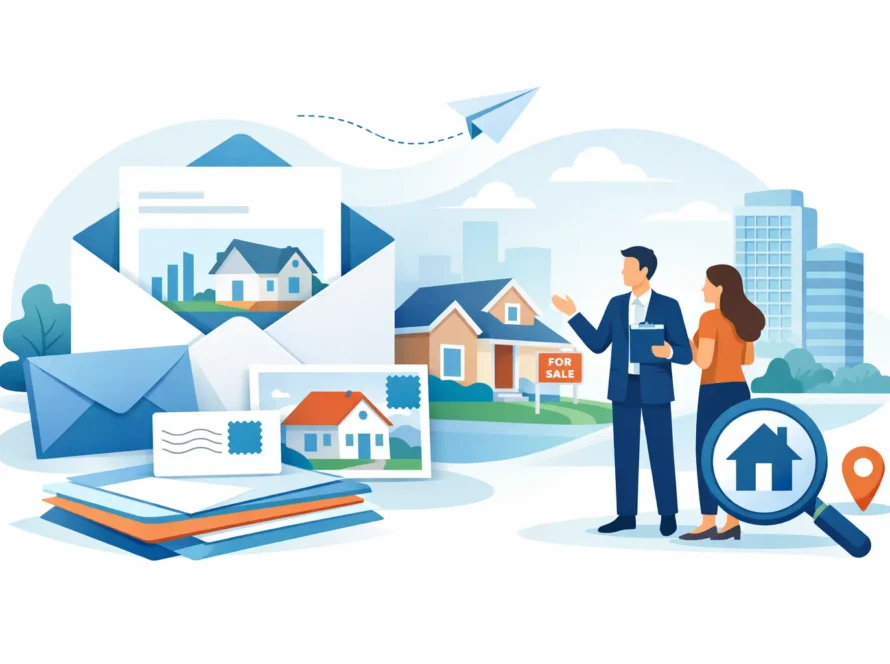
A postcard has about three seconds to earn attention on the walk from the mailbox to the kitchen counter. That is why learning how to direct mail marketing well is less about sending more pieces and more about making better decisions before anything goes to print.
For small businesses, local service providers, real estate teams, and lean marketing departments, direct mail still does something digital ads often struggle to do. It shows up in a real place, in a real customer’s hands, with no algorithm standing in the way. But results do not come from mail alone. They come from the right audience, the right format, the right offer, and clean execution from design through delivery.
How to direct mail marketing with a clear goal
The fastest way to waste a mail campaign is to start with a vague objective. If the plan is simply to “get the name out there,” the creative usually gets too broad, the offer gets weak, and the results become hard to measure.
Start with one primary goal. Maybe you want to book estimates for a home service business, drive traffic to a grand opening, promote a limited-time offer, or keep your brand visible in a specific neighborhood. A direct mail campaign can support all of those goals, but each one calls for a slightly different message and mailing strategy.
That focus also helps determine what success looks like. For some businesses, success is immediate calls. For others, it is coupon redemptions, website visits from a tracked page, or increased foot traffic over a two-week window. If you know what you want the campaign to do, the rest of the decisions get easier.
Choose the right audience before you choose the design
A great-looking mailer sent to the wrong homes is still a bad campaign. Audience selection matters more than most people expect.
If your business serves a defined local area, Every Door Direct Mail can be a smart fit. It works especially well for restaurants, dentists, gyms, real estate agents, home service companies, retail stores, and community-based organizations that want broad neighborhood visibility without building a purchased list. When the goal is local reach and brand presence, saturation mailing often beats overcomplicated targeting.
If your offer depends on a specific customer profile, a targeted mailing list may make more sense. That could include past customers, households in certain income ranges, business addresses, or people in a particular life stage. The trade-off is simple: broader mailings usually cost less per decision and build awareness, while tighter lists can improve relevance but require better data and more planning.
Good targeting is not about chasing perfection. It is about matching your audience to your actual service area, sales capacity, and offer. A roofing company after a storm and a boutique law firm should not mail the same way.
The offer does the heavy lifting
Businesses often spend too much time debating colors and too little time sharpening the offer. The truth is blunt: people respond to value, urgency, and clarity.
A strong direct mail offer gives the recipient a reason to act now. That might be a percentage off, a free consultation, a limited-time upgrade, a bundled service, or a neighborhood-only promotion. For higher-ticket services, “free estimate” can still work, but it works better when paired with a specific benefit. “Free estimate for spring irrigation repair” is stronger than “Call us today.”
This is also where many campaigns get too cautious. If the mail piece asks the customer to do too much mental work, response drops. The recipient should know what you do, who it is for, why it matters, and what to do next within seconds.
Format matters more than people think
Not every campaign needs the same piece. Postcards are popular because they are efficient, visible, and easy to process. They are often the best choice for promotions, announcements, reminders, and neighborhood marketing.
Larger postcards can give you more room for a strong headline, supporting details, and a clear call to action without feeling crowded. Brochures and folded mailers can work when you need more explanation, such as for multi-service businesses, medical practices, schools, or organizations with several offers. Letters can be effective when the message needs a more personal or formal tone.
The right format depends on how much you need to say and how quickly the recipient can absorb it. If your message is simple, do not bury it in too much copy. If your service needs explanation, do not force it into a tiny space just to save room. Good format decisions protect your message.
How to direct mail marketing creative people actually read
Direct mail design should not feel like a flyer with every inch filled. The best-performing pieces are usually the easiest to scan.
Lead with one strong headline. Support it with a short explanation and a visible call to action. Use real hierarchy so the eye knows where to go first, second, and third. Include enough white space to keep the piece readable. And make sure your brand is present without overpowering the offer.
Photos can help, especially for real estate, home improvement, events, retail, and food-based businesses, but only if they support the message. Generic stock imagery rarely carries a campaign. Clear service imagery, recognizable locations, or before-and-after visuals usually do more work.
This is also where print quality matters. Sharp color, sturdy stock, clean trimming, and accurate production all affect how your business is perceived. A mailer does not need to be flashy, but it should look intentional. When your piece arrives looking polished, your company looks more credible.
Make response easy to measure and easy to act on
A direct mail campaign should tell people exactly what to do next. Call. Scan. Visit. Bring in the card. Claim the offer before a date. If the next step is unclear, response suffers.
Measurement matters too. Use a dedicated phone number when possible, a campaign-specific landing page, a promo code, or a distinct offer for that mail drop. Without tracking, it becomes harder to tell whether the list worked, whether the offer landed, or whether timing affected results.
Some businesses expect immediate response from every campaign. That happens sometimes, especially with strong offers and urgent services, but not always. Direct mail can also improve familiarity and future conversion. A homeowner may hold onto a postcard for weeks before needing the service. That does not mean the campaign failed. It means mail often works on both a short cycle and a delayed one.
Timing can change the outcome
A good campaign sent at the wrong time can underperform. Seasonality matters. So does business readiness.
If you are promoting a tax service, holiday retail event, summer camp, HVAC tune-up, or back-to-school offer, mail early enough to give the piece time to arrive and the customer time to respond. Waiting until the last minute compresses your results window and limits follow-up.
Frequency matters too. One drop can work, but repeated exposure usually performs better than a single touch, especially in competitive local markets. That does not mean mailing constantly. It means planning smart repetition. A sequence of two or three well-timed mailings often outperforms one larger blast, because recognition builds with each contact.
Production and mailing details are not small details
This is where campaigns either stay smooth or get messy. Incorrect addressing, postal issues, poor file setup, inconsistent color, or missed in-home timing can undercut good strategy fast.
That is why many businesses prefer to work with one partner that can manage printing and mailing together. It reduces handoff errors, shortens timelines, and makes it easier to catch problems before they become expensive. For teams already juggling storefront operations, sales support, staffing, and day-to-day marketing, that kind of support is not a luxury. It is practical.
If you are running a neighborhood campaign, EDDM can simplify the mailing side while keeping local reach strong. If you need custom lists, variable messaging, or more tailored campaign support, a consultative print and mail partner can help you align format, quantities, and postal strategy without overcomplicating the project. That is one of the reasons businesses turn to companies like Pink Hippo when they want quality printing and hands-on mailing support in one place.
Common mistakes that weaken direct mail
Most weak campaigns have familiar problems. The offer is too soft. The design is too busy. The audience is too broad or too narrow for the objective. The call to action gets buried. Or the business sends one mailer, expects instant results, and gives up before testing what could improve the next round.
There is also the issue of internal follow-through. If the phone is not answered, the landing page is confusing, or the front desk does not know the offer exists, even a strong mail campaign can lose momentum. Direct mail does not work in isolation. It works best when your operations are ready to catch the response.
The businesses that get the best results usually treat direct mail as a repeatable channel, not a one-time gamble. They learn from each drop, adjust the audience or offer, and keep the message clear. That approach is less exciting than hoping for magic, but it is how mail becomes a dependable source of leads and local visibility.
If you are figuring out how to direct mail marketing for your business, keep it simple at the start: mail to the right people, give them a reason to care, and make the next step obvious. The mailbox is still a valuable place to show up, especially when your message looks professional and arrives with purpose.