A crowded event floor gives you about three seconds to look organized. That is usually all it takes for someone to notice a polished booth, read a banner, grab a flyer, or walk past because the setup feels thrown together. If you are comparing the top custom printing services for events, the real question is not just what looks good. It is what helps people find you, remember you, and take the next step after the event is over.
For most businesses, event printing works best when it is treated as a system instead of a one-off order. Your table cover should match your banner. Your handouts should support the same offer shown on your signage. Your postcards should be ready for follow-up, not designed as an afterthought the night before. That is where choosing the right print services matters.
What the top custom printing services for events really include
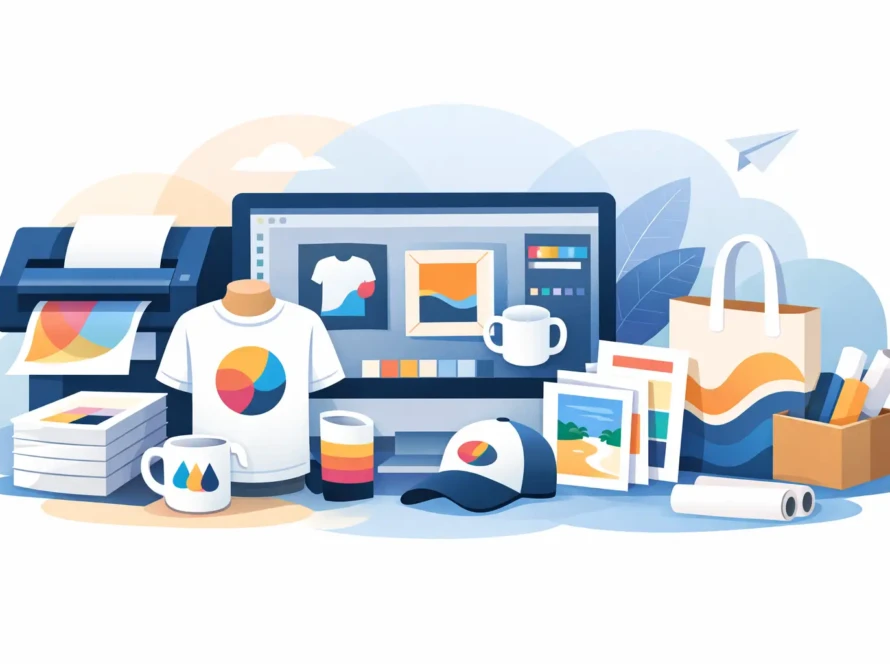
When people hear event printing, they often think about one product, usually a banner. Banners matter, but they are only one part of the job. The strongest event setups usually combine branded display materials, take-home collateral, and post-event follow-up pieces.
That mix looks different depending on the event. A real estate office at a local fair may need yard signs, table covers, flyers, and postcards. A home services company at an expo may get better results from an event tent, large-format banners, brochures, and direct mail prepared for the neighborhoods around the venue. A corporate marketing team exhibiting at a conference may prioritize booklets, business cards, retractable signage, and branded handouts that fit neatly into a leave-behind package.
The point is simple: the best service is rarely a single product. It is the ability to source the right combination quickly, accurately, and without managing three different vendors.
1. Large-format signs that get you noticed fast
If your event space is busy, large-format printing does the heavy lifting. Banners, A-frame signs, window graphics, and oversized branded displays help people identify your business before anyone on your team says a word.
This is where design discipline matters. A sign is not a brochure on a bigger surface. It needs one message, strong contrast, and branding that reads from a distance. If you try to fit every service, every phone number, and every promotional angle onto one banner, it loses impact.
For outdoor events, material choice becomes just as important as the message. A lightweight indoor banner may be fine for a chamber luncheon but a bad fit for a windy street fair. The best printing partners will guide you on stock, durability, and finishing details instead of just taking the order.
2. Event tents and table covers that make small booths look established
Not every business gets premium placement. Sometimes you are working with a folding table, a 10×10 footprint, and limited setup time. That is exactly why printed tents and table covers matter.
They create structure. They make your space look intentional. They also help your brand stay visible when people are approaching from the side or walking by while the table itself is crowded.
This category is often underrated because it feels secondary compared with signs. In practice, it can do more for professionalism than a second banner ever will. If your team attends recurring events, these pieces usually pay off over time because they make every setup look more polished with almost no extra effort.
3. Flyers and brochures that support the sales conversation
Some event attendees want a quick takeaway. Others want details. That is where flyers and brochures earn their place.
Flyers are useful when the message is simple – a seasonal offer, a service menu, a grand opening, or a limited-time promotion. Brochures work better when you need more space to explain options, pricing structure, service areas, or differentiators. Booklets can make sense for more complex products or programs, especially in B2B environments.
The trade-off is cost and attention span. Brochures feel more substantial, but not every audience will read a full tri-fold while walking an event. Flyers are easier to distribute at volume, but they can look disposable if the paper or design feels cheap. A good print strategy matches the handout to the buying behavior of the audience instead of assuming more pages always means more value.
4. Business cards and postcards that are built for follow-up
Business cards still matter at events because they are fast, familiar, and easy to exchange. But they work best when they are part of a larger follow-up plan.
Postcards are often the stronger play if you want to reinforce your message after the event. They give you more room for an offer, a service summary, or a next-step callout. They also transition naturally into direct mail, which is useful if you want your event campaign to keep working after the booth comes down.
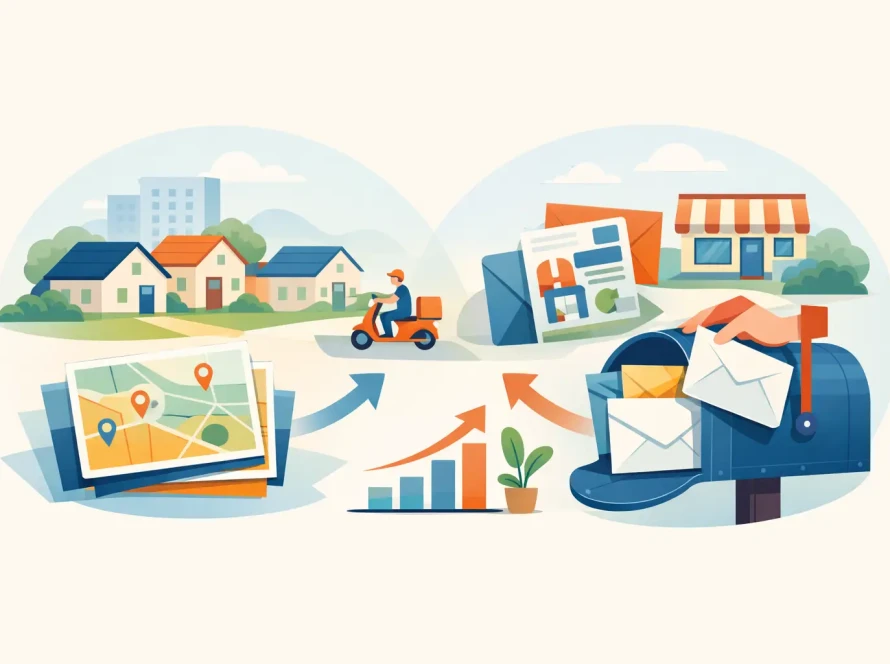
For local businesses, this matters a lot. Meeting people at an event is one touchpoint. Sending a follow-up mail piece to nearby routes or targeted neighborhoods can extend the value of that event spend. That is one reason companies like Pink Hippo are built around both print and mailing support – the print piece does not have to stop at the table.
5. Yard signs and directional signs that drive traffic on site
Some events have excellent foot traffic. Others need help moving people to the right spot. Yard signs and directional signs are practical tools for guiding attendees to parking, check-in, promotions, demonstrations, or off-site event spaces.
They are especially effective for community events, open houses, school functions, church events, political outreach, and local business promotions where visibility starts before attendees reach your table. In those settings, directional signage can be as valuable as the main display because it removes friction.
This is also a category where turnaround speed matters. Event details change. Entrances move. Booth assignments shift. A printer that can respond quickly without sacrificing quality is often more valuable than one offering the lowest online price.
6. Branded stationery and presentation materials for higher-value events
Not every event is casual. If you are meeting prospects in a more formal setting, printed presentation folders, letterhead inserts, notepads, and polished sales sheets can make a stronger impression than standard handouts alone.
These pieces are less about mass distribution and more about perceived credibility. A well-prepared leave-behind packet tells prospects you are organized and ready to do business. That can matter in industries where trust, process, and professionalism influence the sale just as much as price.
The downside is that these materials need tighter planning. If your messaging changes often, large quantities may create waste. For recurring events with a stable offer, though, they can elevate your brand in a way low-cost handouts cannot.
7. Window graphics and branded surfaces for temporary event spaces
Pop-up retail events, sponsorship activations, trade show booths, and leased event venues often have blank surfaces that could be doing more. Window graphics and other branded applications help turn temporary space into recognizable branded territory.
This is one of those services that can make a dramatic difference when used well and waste money when used poorly. The design needs to fit the space, not just the artwork file. Installation timing matters. Removal matters. The best result comes from working with a provider that understands practical execution, not just printing specs.
8. Direct mail support tied to the event itself
This is the service many businesses skip, and it is often where the return improves. If an event is meant to generate local awareness, why stop with the people who happened to walk by your booth?
A coordinated mailer before or after the event can increase attendance, reinforce your offer, or re-engage the same local audience while your brand is still fresh in their minds. Every Door Direct Mail can be especially useful for restaurants, real estate teams, fitness centers, medical offices, home service companies, and local retailers working within defined neighborhoods.
This is also where vendor selection becomes more strategic. If your printer can handle both production and mailing logistics, you save time, reduce handoff errors, and keep the campaign moving. That convenience is not just nice to have when your event date is fixed. It can be the difference between launching on time and missing the moment.
How to choose among the top custom printing services for events
Start with the event goal, not the catalog. If your main objective is visibility, prioritize signage, tents, and branded surfaces. If the goal is lead capture and follow-up, put more attention on brochures, postcards, business cards, and mail-ready pieces. If you need both, build a package that covers attention at the event and action afterward.
Then look at speed, consistency, and support. A broad product lineup is helpful, but it only matters if the printer can keep colors consistent, flag artwork issues, hit deadlines, and help you make smart production choices. Event work usually comes with pressure. You want a vendor that treats that pressure like a normal part of the job.
It also helps to think beyond the next event. Businesses that exhibit regularly usually benefit from reusable branded pieces paired with refreshable collateral. That lowers long-term costs and gives your team a more repeatable setup.
The best event printing does not feel random. It feels connected, practical, and easy for your audience to act on. If your materials can attract attention, support the conversation, and carry the message past the event itself, you are not just ordering print. You are giving your event budget a better chance to produce something measurable.