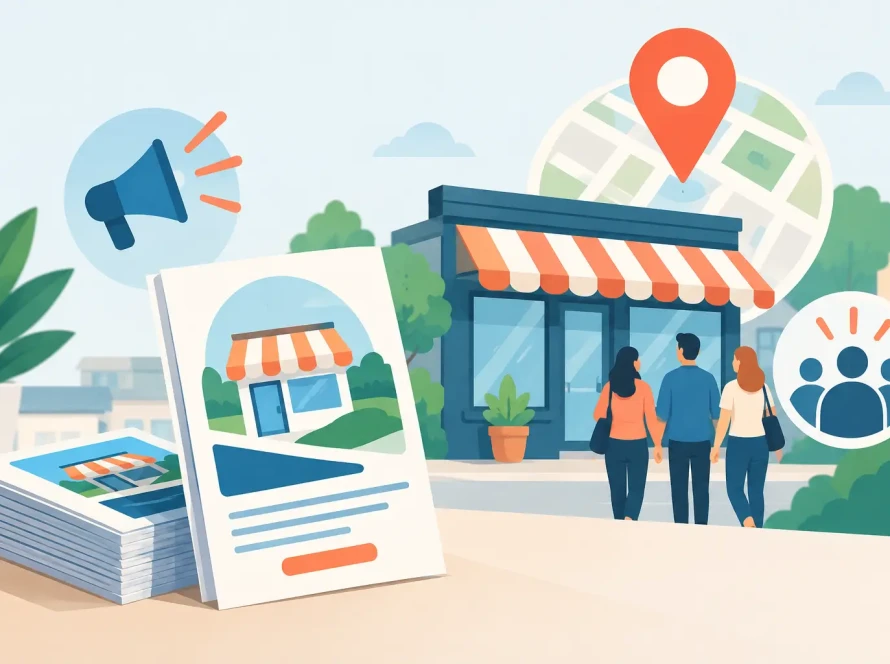
A homeowner may ignore a generic roofing postcard, then stop to read one that mentions storm-season inspections in their neighborhood. A prospective buyer may walk past a standard open-house sign, then notice one featuring the exact property style they have been searching for. That is the practical power of print personalization: making a physical marketing piece feel more relevant to the person receiving or seeing it.
For local businesses, personalization is not about adding a customer’s first name to every page. It is about matching the message, offer, location, and format to the audience most likely to respond. When used with a clear campaign goal and reliable print production, it can make direct mail, sales materials, signage, and event collateral work harder.
What Print Personalization Really Means
Print personalization uses variable information to adapt a marketing piece for a specific customer, household, audience segment, or location. The variable element may be a name, but it can also be a neighborhood, service history, offer, property type, event date, store location, or image.
A dental practice, for example, might mail different postcards to new movers, families with young children, and patients who have not visited in more than a year. The core brand stays consistent, while the headline and offer change to suit the recipient. A real estate agent may use different postcards for homeowners in a target subdivision than for renters near a newly listed property.
This approach works because relevance reduces friction. People do not need to figure out whether the offer applies to them. The piece answers that question quickly.
Personalization is not the same as customization
Customization usually happens when a buyer chooses options for a product, such as selecting a banner size or adding their logo to business cards. Personalization happens when a business uses known information to create more relevant marketing for the recipient.
Both have value. Custom branded materials keep your business looking polished. Personalized campaigns help those materials start more useful conversations.
Where Personalized Print Delivers the Most Value
The best use of print personalization depends on the action you want someone to take. A campaign designed to fill appointments needs a different message than one built to generate listing leads or increase event attendance.
Direct mail campaigns
Postcards and mailers are a natural fit because you can segment a mailing list before production. A home services company may send an AC tune-up offer only to households in a service radius, while changing the timing and language for different climate zones. A salon can promote a first-visit offer to nearby new residents and a loyalty incentive to existing customers.
Every Door Direct Mail can also support a location-based version of personalization. It does not use individual names, but it lets you target carrier routes based on the neighborhoods you want to reach. That makes it useful when geography matters more than customer-level data, such as a restaurant opening, gym promotion, political outreach, or local service launch.
Real estate marketing
Real estate moves quickly, and generic materials can disappear into the background. Personalized postcards can reference a neighborhood, recent market activity, property category, or homeowner concern. A message about townhome values belongs with townhome owners. A luxury listing announcement should reach an audience aligned with that price range and property type.
Agents can also personalize the follow-up. A just-listed postcard, open-house invitation, and just-sold mailer can share a coordinated look while giving each audience a reason to pay attention.
Sales kits and leave-behinds
Personalized print is valuable after a lead has raised their hand. A consultant can bring a proposal folder with the prospect’s company name, relevant case-study pages, and a tailored service overview. A contractor can leave behind an estimate packet featuring the project type and selected options.
This is not always a high-volume application. Even a small run can create a stronger handoff, especially when the sale involves multiple decision-makers or a longer buying cycle.
Events, retail, and local promotions
Variable messaging can guide people at an event or in a physical location. Consider table cards tailored to different sponsor groups, window graphics promoting a neighborhood-specific offer, or event signage that reflects the audience arriving that day.
For these pieces, personalization must remain easy to read from a distance. A banner has seconds to communicate. Save the detailed, one-to-one information for postcards, handouts, or follow-up materials.
Start With Segments, Not Just Names
The most common mistake is treating personalization as a data project instead of a marketing decision. A larger database does not automatically create a better campaign. Start by identifying the groups that have meaningfully different needs.
Useful segments often include recent movers, past customers, lapsed customers, households within a service area, business type, property type, purchase history, or proximity to a location. The right choice depends on what you sell and what information you can accurately use.
Before writing copy, answer four questions:
- Who is this piece for?
- What problem or opportunity is most relevant to them?
- What action should they take next?
- What proof or offer will make that action feel worthwhile?
If the answers are nearly identical for every group, a single strong version may be more efficient. Personalization is most worthwhile when it changes the relevance of the message, not simply the appearance of it.
Build a Campaign That Can Be Produced Accurately
A personalized campaign has more moving parts than a standard flyer. That is why planning matters. The design needs fixed elements, such as your logo, colors, contact information, legal language, and call to action. It also needs clearly defined variable fields and rules for how those fields appear.
For example, a variable headline may be limited to a certain number of characters so it does not run over a photo or crowd the layout. Neighborhood names may need approved formatting. Offers may require different expiration dates. If an image changes by audience, every image must be high resolution and properly sized for the same design area.
Your data should be reviewed before the job goes to print. Check for missing names, duplicate records, outdated addresses, inconsistent abbreviations, and fields that exceed their allotted space. A clean list protects your budget and your brand.
Keep the offer simple
Relevant messaging is powerful, but too many changing elements can make a campaign confusing. In most cases, personalize the one or two details that matter most, then keep the call to action consistent.
A landscaping company might vary the headline by neighborhood and yard type while using one clear offer: schedule a spring estimate. A business that changes the headline, image, offer, phone number, deadline, and service list for every record may create more opportunities for errors without creating more response.
Choose the Right Printed Format
The format should fit the moment and the desired action. Postcards are effective for immediate offers, appointment reminders, listing announcements, and new-customer promotions because the message is visible right away. Folded mailers provide more space when you need to explain a service, show before-and-after work, or include multiple offers.
Brochures and booklets work well for personalized sales conversations, especially when the recipient needs time to compare options. Business cards, letterhead, envelopes, and notepads can reinforce the relationship after the initial campaign. Signs, banners, and window graphics are best when location itself is the targeting strategy.
Paper stock and finishing matter, too. A heavy postcard can feel more substantial for a premium service, while an affordable uncoated stock may suit a high-volume neighborhood promotion. Gloss can make photography pop. Matte finishes can feel more refined and are easier to write on. The right choice depends on your audience, distribution method, budget, and brand.
Measure More Than Response Rate
A personalized mailer should have a trackable next step. This could be a dedicated phone number, unique promo code, specific landing page, appointment form, or QR code tied to the campaign version. Even when several segments share the same offer, use separate tracking so you can see which message and audience produced the strongest results.
Look beyond immediate sales. Track calls, booked consultations, redemptions, repeat purchases, event attendance, and cost per lead. For real estate and high-consideration services, a campaign may create leads that take weeks or months to convert.
Do not assume every campaign needs extreme personalization. Sometimes a neighborhood-specific EDDM postcard outperforms a more detailed one-to-one piece because it reaches more of the right households at a lower cost. The smart choice is the one that matches your data, timeline, budget, and goal.
Make Personalization Easy to Execute
A strong campaign should not force you to juggle separate vendors for design revisions, printing, mailing, and rush reorders. Working with a print and mail partner that can review files, flag production issues, manage variable data, and handle distribution keeps the process moving when deadlines are tight.
Pink Hippo helps businesses bring together personalized print, direct mail execution, and the everyday branded materials that support follow-up. The goal is not personalization for its own sake. It is getting a relevant message into the right hands, in a format that makes your next step easy to take.
Start with one audience that matters most, one offer they can understand quickly, and one measurable action. A well-targeted postcard or tailored sales piece can tell your audience something generic marketing cannot: this was made with you in mind.