A postcard with a weak offer disappears into the mail pile. A business card with fuzzy type can make a great first conversation feel less credible. A banner that is hard to read from the street is simply expensive decoration. Commercial printing is where a marketing idea becomes a physical piece of your business – one that customers can hold, read, save, and act on.
For local businesses, real estate professionals, and busy marketing teams, print is not a leftover from another era. It is a practical way to put your name, offer, and contact information in front of the right people. The difference between print that produces results and print that gets ignored often comes down to a few decisions made before the job reaches the press.
What Commercial Printing Does for Your Business
Commercial printing covers the professionally produced materials businesses use to market, sell, inform, and stay organized. That may mean a stack of business cards for a growing sales team, brochures for an open house, postcards for a neighborhood promotion, or large-format signs for an event.
The value is not just ink on paper. Professional production gives your materials consistent color, clean trimming, readable type, and paper or signage stock suited to the way the piece will be used. It also gives you options that home or office printers cannot handle well, including larger quantities, custom sizes, folding, finishing, variable data, mailing preparation, and durable outdoor graphics.
A polished printed piece helps customers make a quick judgment: this business is established, prepared, and worth contacting. That impression matters especially when you are competing in a crowded local market.
Start With the Job the Piece Needs to Do
Before choosing paper thickness, postcard size, or a finish, decide what you need the printed piece to accomplish. One piece should usually have one primary job. Trying to announce a new service, recruit employees, explain your history, promote five offers, and collect reviews on the same flyer usually weakens every message.
A restaurant coupon may need to drive a first visit. A real estate postcard may need to keep an agent’s name familiar in a specific neighborhood. A trade show banner may need to explain what you do in three seconds from across the aisle. A booklet may need to give a prospect enough detail to support a larger buying decision.
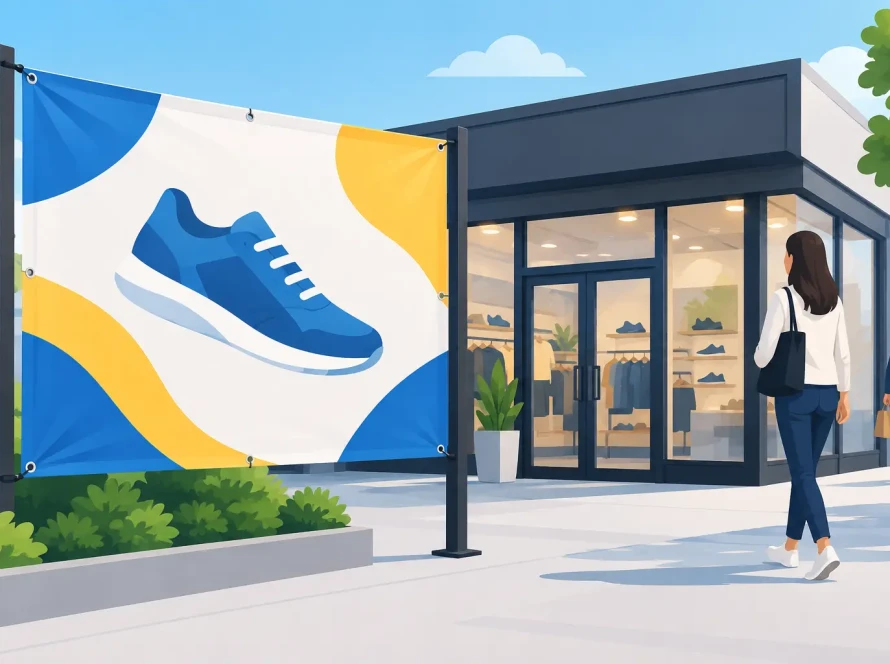
That goal affects the format. Postcards are direct and fast to scan. Brochures give you more room to explain services. Business cards are compact contact tools, while presentation folders and booklets support longer sales conversations. Yard signs, window graphics, banners, and A-frame signs work best when people need to notice your message while moving past it.
The strongest print projects are designed around how people will encounter them, not around how much information the business wants to fit on the page.
Choose Format, Stock, and Finish With Purpose
Print choices shape the feel of your brand. They should support the message, budget, and expected lifespan of the piece.
For example, a heavyweight business card can reinforce a premium service experience, while a practical uncoated stock may be a better fit for appointment cards or forms that customers need to write on. Glossy finishes can make product photography and bold colors stand out. Matte finishes offer a more understated look and are often easier to read under bright light.
Size matters, too. A larger postcard can command attention in the mailbox, but it costs more to print and mail. A standard size may be the smarter option for a recurring campaign where repetition matters more than making a single oversized statement. For signs, bigger is not automatically better. A sign needs enough space for a message that can be read at the distance and speed your audience will encounter it.
Ask practical questions before approving a job: Will this be mailed, handed out, displayed outdoors, or used repeatedly by your team? Does it need to survive rain, frequent handling, or a crowded event table? Does the recipient need to write on it? The answers will guide the right production choices.
Design for a Fast, Clear Response
Most customers will not study a printed piece. They will give it a few seconds and decide whether it is relevant. Put the most important information where it can be seen quickly: what you offer, who it is for, why it matters, and what to do next.
Your call to action should be specific. “Call for a free estimate,” “Schedule your showing,” “Bring this card for 15% off,” or “Visit us this weekend” gives people a clear next step. Generic phrases such as “Learn more” can work in some settings, but a local offer often benefits from a stronger reason to respond now.
Keep contact information easy to find. If you have a phone number, website, email address, physical location, and social media handles, you do not always need every item on every piece. Prioritize the channel you actually want prospects to use. A postcard campaign for a service business may need a prominent phone number. An event banner may need a simple website or short message people can remember.
A few pre-print checks prevent costly mistakes
Before a file goes into production, review these details carefully:
- Confirm phone numbers, email addresses, dates, prices, and offer terms.
- Check that logos and photos are high resolution and appear sharp at final size.
- Keep important text away from trim edges, folds, and mailing areas.
- Proof names, addresses, and every word of the call to action.
A second set of eyes is worth the extra few minutes. Reprinting because of a missing digit or outdated offer is far more expensive than reviewing a proof with care.
Pair Commercial Printing With Direct Mail
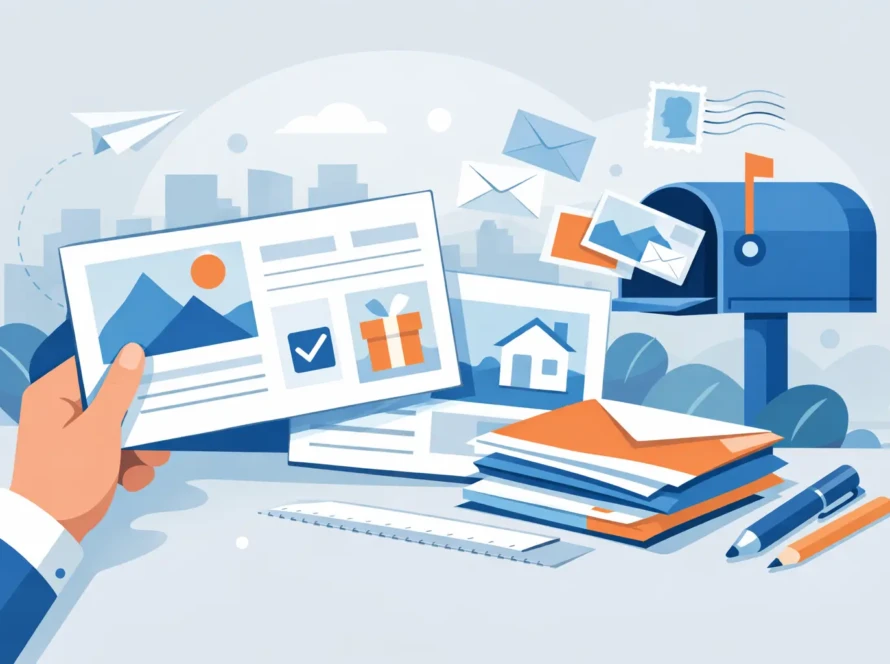
Direct mail gives print a built-in distribution plan. Instead of waiting for customers to find a rack card or pick up a flyer, you can place a targeted offer directly into homes and businesses.
Every Door Direct Mail, often called EDDM, is particularly useful when geography matters more than having an individual mailing list. A local contractor can introduce seasonal services to nearby neighborhoods. A new retail location can promote an opening to surrounding households. A restaurant can send a limited-time offer to areas within an easy drive.
EDDM is not the right fit for every campaign. If your offer is highly specialized or your audience is defined by past purchases, job title, or another detailed characteristic, a targeted mailing list may make more sense. But for broad local visibility, it can be an efficient way to reach a defined carrier route without buying a list.
The mailing piece needs to work hard. Use a clear headline, an offer that is easy to understand, and an expiration date or reason to act. Avoid covering the front with dense copy. The goal is not to tell your full company story in one pass. The goal is to earn the call, visit, scan, or appointment.
A full-service print and mail partner can also reduce handoffs. Rather than managing design files, print quantities, addressing, postal requirements, bundling, and delivery through separate vendors, you can coordinate the project in one place. Pink Hippo helps businesses manage that process from printed marketing materials through mailing execution, which is especially helpful when deadlines are tight.
Plan Print Campaigns Around Real Business Moments
Print works best when it is tied to a business moment, not ordered only when supplies run out. Think about the calendar your customers already follow.
Home service businesses can plan before seasonal demand. Real estate professionals can prepare property brochures, open-house signs, and neighborhood postcards before listing activity picks up. Schools, nonprofits, and local organizations can schedule event materials and donor mailers before registration or fundraising windows. Retailers can line up signage, coupons, and direct mail around promotions rather than scrambling after the offer has already been announced.
Recurring materials deserve attention, too. Letterhead, envelopes, notepads, folders, and business cards may seem basic, but they keep your brand consistent across daily interactions. When every employee uses the same current logo, colors, and contact details, your business looks organized at every touchpoint.
Get Better Results From Every Reprint
The first version of a printed campaign is rarely the final answer. Track what happened after it went out. Did a particular neighborhood generate calls? Did one offer produce more redemptions? Did prospects mention the postcard, sign, or flyer when they contacted you?
You do not need complicated reporting to learn something useful. Use a campaign-specific offer code, landing page, phone extension, or simple question such as “How did you hear about us?” Then carry those lessons into the next run. A better headline, clearer offer, stronger photo, or more focused mailing area can improve results without requiring a complete redesign.
When your next promotion is approaching, start with the customer action you want to create. From there, choose the format, message, and distribution method that make that action easy. Good print does more than fill a mailbox or decorate a counter. It gives people a clear reason to remember your business and a simple way to respond.