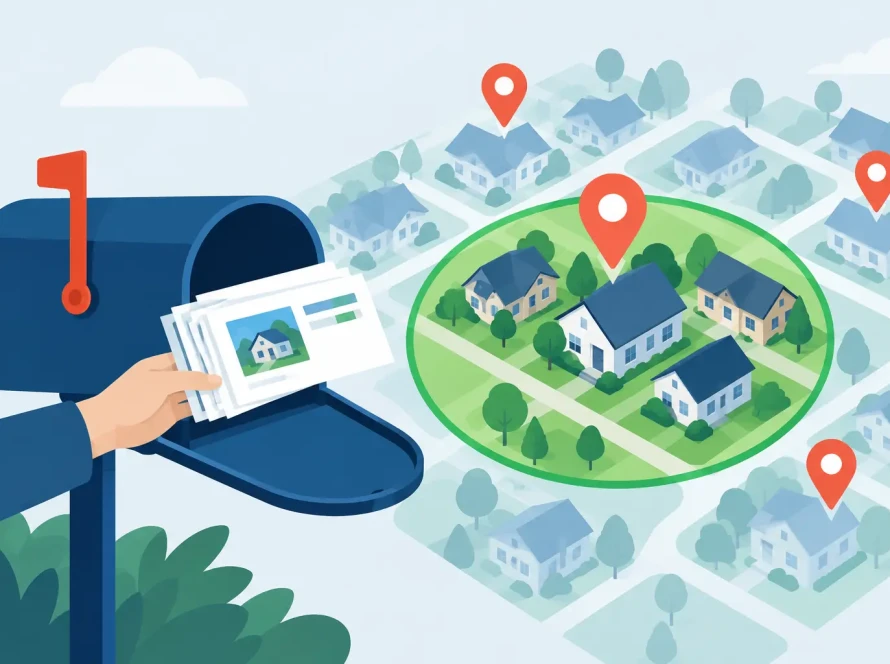
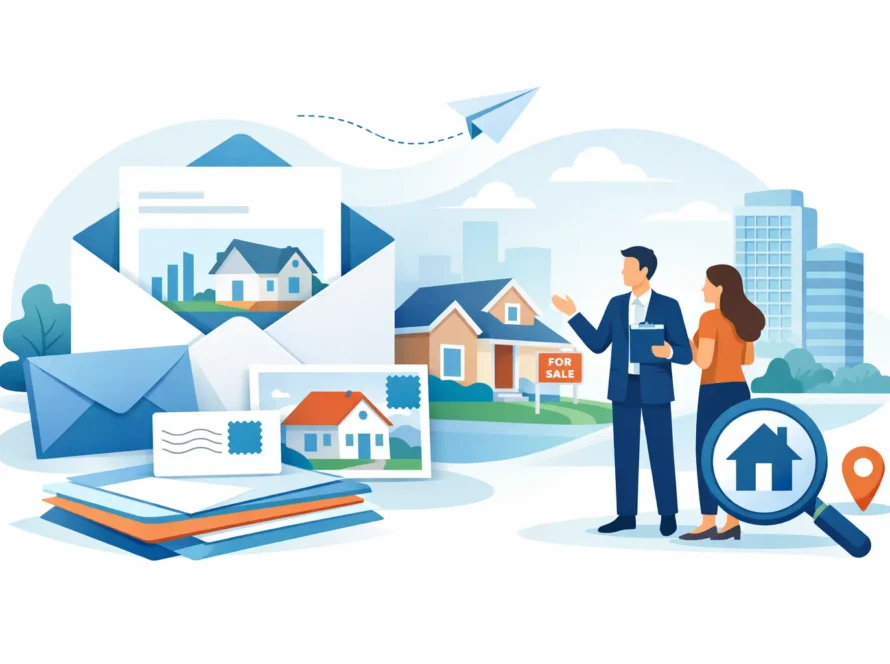
A mailbox is not an inbox. People do not scan it while deleting messages between meetings. They hold the piece, notice its size and color, and often set it aside for later. That physical advantage is why the best direct mail marketing examples are not simply attractive print pieces. They make a specific local offer, reach the right household or business, and give the recipient one easy next step.
For small and mid-sized businesses, direct mail works best when it supports a real sales goal: filling appointment slots, announcing a new location, introducing an agent to a neighborhood, or bringing back past customers. The following examples show how to make print feel timely, useful, and worth keeping.
1. The neighborhood offer postcard
A bold postcard with a limited-time offer remains one of the most reliable formats for local businesses. Think of a dental office offering a new-patient special, a salon promoting a first-service discount, or an HVAC company providing a preseason tune-up rate. The front should earn attention in seconds with one headline, one strong image, and the offer. The back should explain what happens next.
This format is especially effective with Every Door Direct Mail when the offer matches the selected neighborhoods. A family-focused service belongs in family-heavy areas. A premium home service may perform better in neighborhoods with older homes or higher property values. The trade-off is that a broad mailing needs a simple message. Do not crowd a postcard with every service you provide.
2. The “new to the neighborhood” introduction
Opening a location, expanding a service area, or entering a new market calls for more than a generic announcement. A well-designed mailer can introduce the business, establish credibility, and offer a reason to try it now. Restaurants can feature a grand-opening incentive. Medical practices can highlight convenient hours and accepted insurance. Local retailers can include a bring-this-card offer.
This is one of the best direct mail marketing examples because it answers the recipient’s immediate questions: What is this business? Where is it? Why should I care? A map, storefront photo, or recognizable local landmark can make the piece feel grounded in the community. Keep the call to action focused on one behavior, such as booking, visiting, or calling.
3. The real estate just-listed or just-sold card
Real estate mail performs best when it contains news that is genuinely relevant to the recipient’s block or neighborhood. A just-listed card creates curiosity. A just-sold card demonstrates activity and gives the agent a clear opening to start a conversation about home value, timing, or buyer demand.
The strongest version includes a professional property image, the neighborhood name, and a concise local takeaway. For example: “Three buyers missed this home. Want to know what yours could sell for?” Avoid turning the entire card into an agent biography. Homeowners care first about what changed nearby and what it could mean for them.
Consistency matters here. One mailer rarely builds name recognition, but a regular cadence can. Pair listing cards with yard signs, open-house materials, and branded business cards so every touchpoint looks like part of the same operation.
4. The seasonal service reminder
Some businesses do not need to invent demand. They need to arrive in the mailbox just before demand peaks. Landscapers can promote spring cleanups. Roofers can send storm-season inspection reminders. Accountants can mail tax-prep notices. Fitness studios can run a January trial offer.
A seasonal mailer works because it is useful, not because it is complicated. Use a clear deadline, practical timing, and a service-specific message. “Schedule your furnace check before the first cold snap” is more persuasive than “Call us for all your home comfort needs.” The latter may be true, but the former gives people a reason to act today.
5. The high-value letter package
Postcards are excellent for fast offers and broad local reach. For a higher-consideration purchase, a letter package can do more of the selling. Financial professionals, B2B service providers, senior living communities, legal offices, and home improvement companies often need space to explain the problem they solve and build trust.
A simple package might include a personalized letter, a brochure or service sheet, and a reply card. The envelope creates curiosity, while the letter provides the human explanation that a postcard cannot always hold. This approach costs more per recipient, so it makes the most sense for a targeted list where each new customer has meaningful value.
Personalization should feel relevant, not forced. Addressing someone by name is useful. Referencing a local business challenge, homeowner concern, or life-stage need is better. The goal is to make the message feel considered without crossing into overly familiar territory.
6. The expired offer follow-up
A good direct mail campaign does not always end when the first offer expires. A second piece can reach people who noticed the promotion but did not act. This follow-up can use a fresh angle: an extended deadline, a bonus add-on, a customer testimonial, or a reminder that appointments are filling quickly.
The key is to avoid sending the identical card twice. If the first mailing said “20% off,” the follow-up might say, “Your neighborhood offer ends Friday – reserve your appointment now.” That message adds urgency and acknowledges that the recipient may already recognize the business.
For businesses with a customer list, follow-up mail can be even more targeted. Send it to prospects who requested information, former customers who have not returned, or clients whose service cycle is coming due.
7. The loyalty and referral mailer
Direct mail is not only for finding new customers. A printed thank-you card, referral incentive, or VIP invitation can help retain people who already know your work. This is particularly useful for salons, gyms, local retailers, property managers, and professional services.
A referral card should make the reward easy to understand for both sides. For instance, “Give a friend $25 off. Get $25 toward your next service.” Add room for a name or code if tracking matters. A more premium version can use heavier stock, a folded format, or a hand-signed note from the owner.
This approach is less about volume and more about relationship value. It may not produce a large spike in leads overnight, but it can create repeat business and word-of-mouth referrals that cost less than acquiring a cold prospect.
8. The event invitation with a reason to attend
Open houses, store events, educational sessions, customer appreciation days, and community fundraisers all benefit from a tangible invitation. Unlike a digital event notice, a printed invitation can stay on a refrigerator, desk, or counter until the date arrives.
The design should make the essentials impossible to miss: what it is, when it happens, where to go, and why attending is worthwhile. Include a response method only if it helps with planning. For an open-house event, a simple “Bring this card for a complimentary market report” may be enough. For a workshop with limited seating, an RSVP instruction makes sense.
Coordinate the invitation with event banners, table covers, signage, and handouts. The mailer starts the experience, but the materials people see on-site reinforce whether the business feels organized and professional.
9. The local credibility mailer
Testimonials, awards, project photos, and years of service can make a strong direct mail piece when presented with restraint. A contractor might feature one standout before-and-after project and a short client quote. A local business might celebrate an anniversary by thanking the community and sharing a customer favorite offer.
Credibility mail is particularly useful when a service requires trust. People may need a plumber, attorney, or repair company eventually, even if they do not need one this week. A polished mailer can put your name in their mental shortlist before the urgent moment arrives.
The risk is making the piece too self-congratulatory. Lead with what the experience means for the customer: dependable work, responsive service, local knowledge, or proven results. Then let the evidence support the claim.
10. The multi-touch neighborhood campaign
The most effective campaigns often combine several of these examples over time. A home services company might mail a seasonal postcard, follow it with a credibility card, and send a final appointment reminder to the same area. A real estate agent might alternate market updates, new listings, and just-sold results.
Repetition builds familiarity, but every touch needs a job. One piece creates awareness. Another creates urgency. Another proves credibility. Track calls, codes, landing page visits, appointment requests, or in-store redemptions so you can see which message and neighborhood earn the best response.
Make the mail piece easy to act on
No matter which concept you choose, production details influence performance. Use a size that stands out without making postage or mailing requirements unnecessarily complex. Choose paper stock that fits the message. A luxury service may benefit from a heavier, more tactile card, while a broad EDDM promotion may need a cost-efficient format that still looks polished.
Most importantly, make the response path obvious. Put the phone number, website, offer code, address, or QR code where the eye naturally lands. Give people one primary action rather than five competing options. If the campaign is time-sensitive, state the deadline clearly.
The right direct mail piece is not the one with the most design elements. It is the one that gets your offer into the right hands, makes the next step feel simple, and arrives looking as professional as the service behind it. When you are ready to turn an idea into a campaign, Pink Hippo can help bring the design, printing, and mailing pieces together without adding more vendors to your to-do list.