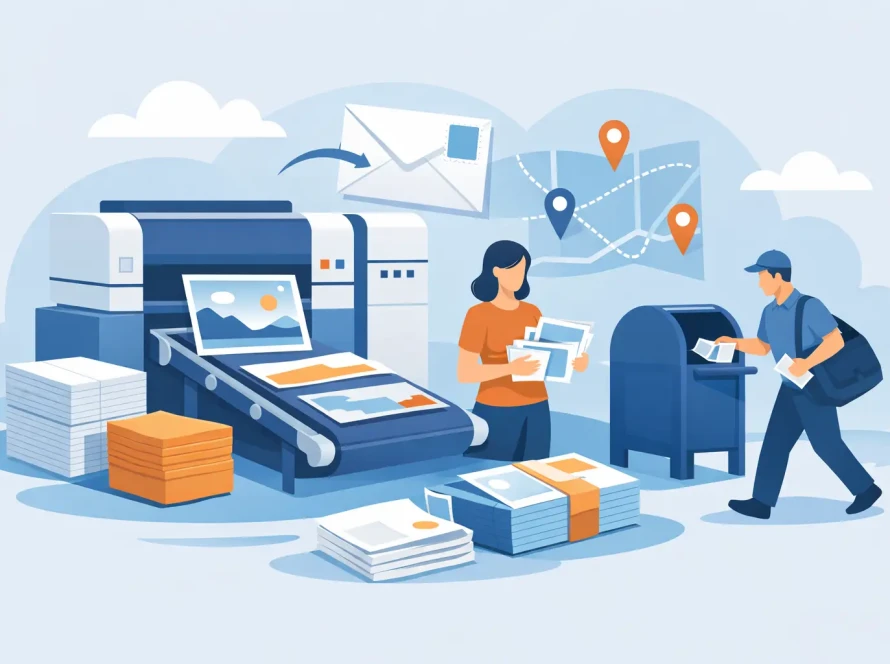
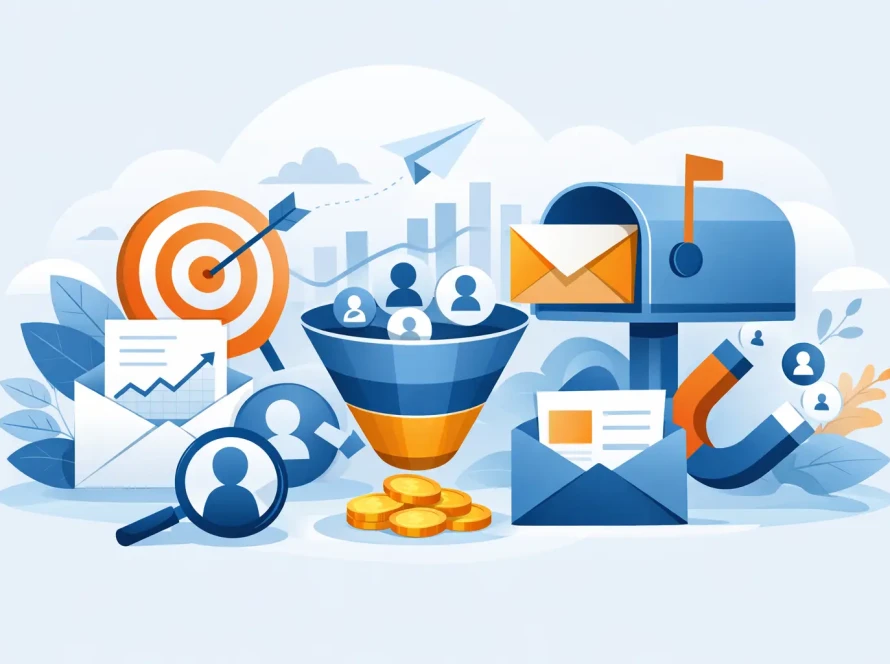
A new homeowner may need a plumber before they know which company to call. A family driving past your storefront may be ready for a first visit if the offer is right. EDDM mailing puts your message in front of homes and businesses in the neighborhoods that matter to your business, without requiring you to build, buy, or maintain a traditional mailing list.
For local businesses, that matters. You are not trying to reach everyone in the country. You are trying to stay visible where your crews work, where your customers live, or where your next location is opening. Every Door Direct Mail can make that outreach practical, especially when your print, route selection, and postal preparation are handled with care.
What Is EDDM Mailing?
Every Door Direct Mail, commonly called EDDM, is a USPS service designed for saturation mail. Instead of addressing a postcard or flyer to individual names and street addresses, you select USPS carrier routes. Your marketing piece is delivered to the addresses served by those routes.
That difference changes the campaign strategy. Traditional direct mail is usually list-driven: you choose recipients based on customer data, demographics, purchase history, or other list criteria. EDDM is geography-driven. You choose the neighborhoods, business areas, or delivery zones where you want to be seen.
It is a strong fit for businesses with a local service area, including restaurants, salons, real estate teams, contractors, dentists, fitness studios, retail stores, healthcare practices, and community organizations. It can also support grand openings, seasonal offers, event promotion, service-area expansion, and repeat brand awareness campaigns.
EDDM is not a shortcut around strategy. It removes the need for an address list, but it still asks you to make smart choices about territory, audience, format, offer, and timing.
Why Local Businesses Choose EDDM
The most obvious benefit is reach. A single route can put a printed offer in every mailbox on that route, giving a local business broad neighborhood coverage without paying for individual addressing or list acquisition.
It also gives you more control over where your budget goes. A roofing company can mail near recent storm-affected areas. A realtor can focus on neighborhoods near a new listing. A restaurant can build awareness within a practical delivery radius. A service business can prioritize routes near its existing jobs, where brand familiarity may already be building.
Printed mail has a physical presence that digital ads do not always achieve. A well-designed postcard can live on a kitchen counter, refrigerator, or desk. That does not mean every recipient will respond, and it should not be the expectation. The value is repetition and local relevance. When someone needs what you offer, a familiar name and a clear call to action can move your business higher on their list.
Cost efficiency is another reason businesses consider EDDM. The postage structure is generally simpler than individually addressed direct mail, but total campaign cost still depends on the mailpiece, quantity, route count, printing choices, and postal requirements. The lowest-cost piece is not always the best value. If a thin flyer gets overlooked or a vague offer produces no measurable action, the savings disappear quickly.
Start With the Neighborhood, Not the Postcard
The best EDDM campaigns begin with a service-area question: where are the customers most likely to act?
A broad radius around your business can be a reasonable starting point, but it is not always the strongest choice. Consider your average customer value, travel time, local competition, household type, and whether the neighborhood matches your offer. A premium home renovation company may favor areas with older homes and higher renovation potential. A family entertainment venue may focus on neighborhoods with households that align with its hours, pricing, and experience.
Carrier routes are useful because they let you build a campaign around real delivery areas rather than guessing by ZIP Code alone. A ZIP Code can cover very different types of neighborhoods. Route-level selection gives you a more precise way to concentrate distribution.
Before finalizing routes, ask practical questions. Can your team handle the response if the offer works? Is the route inside your normal service area? Are you mailing to residences, businesses, or a mix? Is this a first test, or are you reinforcing a campaign that has already shown results?
For many businesses, the right approach is to start with a manageable group of routes, measure performance, and expand with confidence. A larger drop can create visibility, but a smaller test can reveal which offer and territory deserve more budget.
Match the format to the job
Postcards are a popular EDDM format because the message is visible immediately. They work well for discounts, openings, appointment offers, menus, seasonal services, and simple calls to action. Oversized postcards can create stronger visual impact, while smaller formats can be a sensible choice for straightforward promotions.
Flyers can work when you need more room for service details, event information, or multiple offers. For a business with a visual product, such as landscaping, remodeling, real estate, or food service, strong photography can do meaningful work. For professional services, a clean design with a focused headline, credibility points, and clear contact information is often more effective than trying to fill every inch of space.
USPS has size, weight, and mailpiece preparation requirements for EDDM, so format decisions should be made before printing begins. This is where working with an experienced print and mail partner can prevent expensive reprints or last-minute production changes.
Create an Offer People Can Understand Fast
Your mailpiece has only a few seconds to earn attention. The recipient should be able to tell what you offer, why it is relevant, and what to do next without turning the piece into a scavenger hunt.
Lead with one primary message. “Free estimate,” “$25 off your first service,” “Now serving your neighborhood,” or “Open house this weekend” is more memorable than a crowded collection of unrelated promotions. If you have several services, choose the one most likely to start the customer relationship and mention the others as supporting information.
A strong EDDM piece usually includes your logo, a clear headline, one compelling offer or reason to act, a deadline when appropriate, contact details, and a direct next step. That next step might be calling, scanning a QR code, visiting a location, booking an appointment, or bringing the postcard into a store.
Do not let design get in the way of response. Tiny type, low-contrast colors, busy backgrounds, and too many competing calls to action can weaken an otherwise good campaign. Professional printing matters here because color, paper stock, trimming, and overall presentation shape whether your brand feels established and trustworthy.
Plan Timing and Follow-Up Before the Mail Drops
A mailer should arrive when your business is ready to respond. If you are promoting HVAC tune-ups, exterior cleaning, holiday catering, tax preparation, or back-to-school services, build the campaign around the buying window rather than the date you happened to finish the design.
Give yourself enough lead time for design approval, printing, postal preparation, and delivery. If the offer has a deadline, make sure it leaves a realistic response window after the mail is delivered. Very short deadlines can create urgency, but they can also frustrate recipients who receive the piece late in the campaign.
Follow-up is where many local campaigns lose momentum. Train the person answering the phone to ask how callers heard about you. Create a unique promo code, QR code, landing-page phrase, or offer name so you can connect inquiries to the campaign. If you run multiple route groups, consider varying the code by territory to see which neighborhoods respond best.
EDDM works especially well when it supports other local activity. Your mailer can reinforce yard signs, event signage, social posts, local sponsorships, door hangers, and storefront promotions. Seeing the same offer in more than one place builds recognition faster than treating each marketing channel as a separate effort.
Common EDDM Mistakes to Avoid
The first mistake is mailing everywhere because it feels safer. More homes do not automatically mean more qualified customers. Focused distribution usually produces cleaner learning and better operational control.
The second is treating the mailpiece like a company brochure. Recipients care first about their own need, not your full company history. Make the offer and customer benefit visible before the background details.
The third is failing to measure results. Even a simple tracking method helps you compare campaigns over time. Track calls, scans, booked jobs, in-store redemptions, and revenue – not just how many pieces were mailed.
Finally, do not underestimate execution. Postal requirements, route paperwork, bundling, indicia placement, and print specifications need to be right. Pink Hippo can help businesses bring route selection, design execution, printing, and mailing preparation together, so the campaign moves from idea to mailbox without unnecessary handoffs.
A good neighborhood mailer does not need to be flashy. It needs to be relevant, easy to act on, professionally produced, and delivered where your next customers are most likely to live. Start with the streets that make business sense, give people a reason to respond, and let each campaign teach you where to go next.