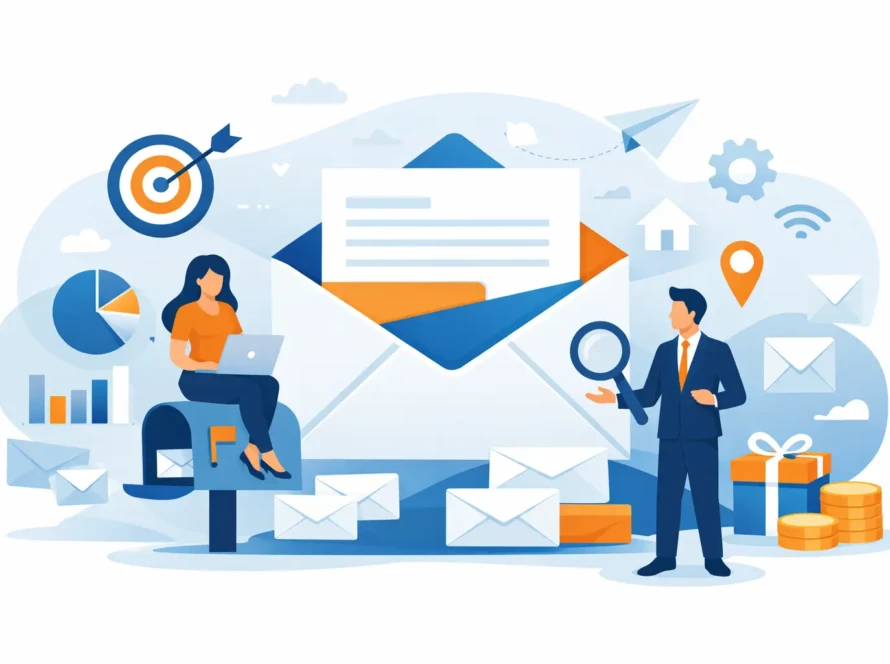
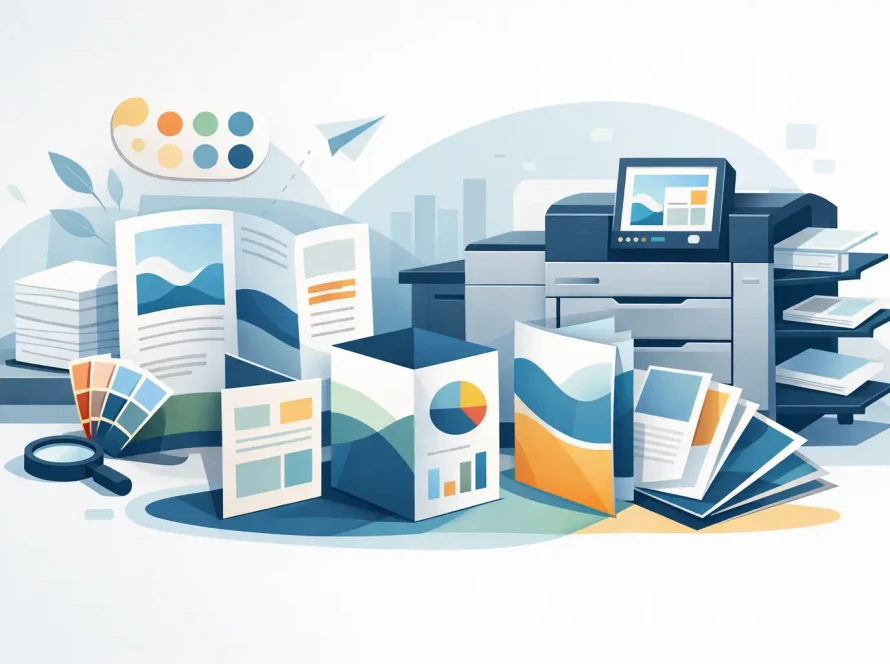
A new restaurant opening three miles from your location does not need a customer database to create a strong first impression. It needs a compelling offer in the mailboxes around its doors. A financial advisor promoting retirement planning, on the other hand, may need to reach a carefully selected group of households. That difference is at the heart of EDDM vs direct mail.
Both services put printed marketing in people’s hands, and both can drive calls, visits, appointments, and repeat business. The better choice depends on who you need to reach, how specific your message is, and what you want each mailed piece to accomplish.
EDDM vs Direct Mail: The Core Difference
Every Door Direct Mail, usually called EDDM, is a USPS program that lets businesses mail to every eligible address on selected carrier routes. You choose neighborhoods or routes based on geography and audience indicators, then your mail piece is delivered to homes or businesses along those routes. You do not need an individual mailing list or recipient addresses printed on each piece.
Traditional direct mail is more targeted. Your campaign is sent to a list of specific recipients, whether that list comes from your customer records, past leads, membership data, or a purchased prospect list. Each mail piece carries an individual name and address, and the message can be tailored to the recipient or audience segment.
The simplest way to think about it is this: EDDM is neighborhood coverage. Direct mail is audience selection.
That does not mean one is automatically better. A local gym may get excellent results by placing an opening offer in every nearby household. The same gym might later use direct mail to send a win-back offer to former members or a referral promotion to its most active customers.
When EDDM Makes the Most Sense
EDDM is built for businesses that win when local awareness is high. If someone is likely to become a customer because they live, work, or travel near your location, broad geographic coverage can be highly effective.
It works especially well for restaurants, real estate agents, home service companies, medical and dental offices, retail stores, schools, fitness centers, local events, and seasonal promotions. A roofing contractor does not necessarily need to know every homeowner’s name to promote a free inspection after a major storm. Reaching the right neighborhoods quickly is often the bigger priority.
EDDM also removes a major barrier for new businesses: list building. If you have not yet collected customer data, you can still launch a local campaign. Select your routes, create a clear postcard or flyer, and get your offer into nearby mailboxes.
Cost is another reason many local businesses start with EDDM. Postage is generally lower than many addressed direct mail options, and there is no need to buy or maintain a mailing list. That makes EDDM a practical option for testing a new offer, announcing a grand opening, or keeping a regular presence in a service area.
The trade-off is reach. You may deliver to many people who are outside your ideal customer profile. A high-end kitchen remodeling company, for example, may prefer a more selective approach if its offer is designed for households with specific income, home value, or ownership characteristics.
When Direct Mail Is the Better Fit
Direct mail earns its value when precision matters. Instead of reaching every address on a route, you can mail only to people who fit a specific profile or who already have a relationship with your business.
Your own customer list is often the strongest place to start. Mail a service reminder to past HVAC customers before peak season. Send a special offer to clients who have not purchased in six months. Invite loyal customers to an appreciation event. Because the recipients know your business, the message can be more relevant and the offer can be more specific.
Prospect direct mail is useful when you want to focus on selected demographics, household traits, geography, or business categories. A real estate agent might target homeowners in a particular neighborhood. A business-to-business provider may mail to offices by industry, company size, or decision-maker role.
Personalization is another advantage. A recipient’s name, location, past purchase behavior, or unique offer can be incorporated into the mail piece. Not every campaign needs this level of detail, but it can help when the service is high-value, the sales cycle is longer, or the audience is narrow.
Direct mail typically requires more planning. List quality matters, address hygiene matters, and the final cost includes data, addressing, postage, printing, and any personalization. Still, mailing fewer pieces to better-qualified prospects can be more efficient than sending a broad message to an entire neighborhood.
Compare Cost by Campaign Goal, Not Postage Alone
It is easy to compare EDDM and direct mail by looking at per-piece postage. That number matters, but it should not make the decision by itself. The real question is what a new customer, appointment, estimate request, or sale is worth to your business.
EDDM often gives you lower-cost local exposure at scale. If your offer has broad appeal and your business serves a defined area, the ability to cover thousands of nearby addresses can make sense. Think of it as a local awareness tool with a direct response opportunity built in.
Direct mail may cost more per piece, but it can reduce wasted reach. If you only need to contact prior customers, qualified homeowners, or a precise business audience, targeted mail can produce a stronger response from a smaller quantity.
A smart campaign budget also accounts for the mail piece itself. A rushed design, an unclear offer, or an unreadable call to action can weaken either format. Your print should be professional, but it also needs to do a job: tell recipients what you offer, why they should care now, and exactly what to do next.
Choosing the Right Mail Piece
EDDM campaigns often perform well with bold, easy-to-scan formats. Postcards, oversized postcards, menus, flyers, and promotional mailers can create immediate visibility. Since recipients are not being addressed by name, the design should quickly establish who you are and why the offer is relevant to their neighborhood.
For direct mail, you have more room to match the format to the relationship. A postcard can work for a simple reminder or promotion. A letter package may be better for a detailed service, insurance offer, financial message, or business proposal that benefits from more explanation. Variable messaging can help make the piece feel more personal when the data supports it.
In both cases, resist the urge to put everything on one piece. Lead with one primary offer or message. Use a strong headline, clear contact information, and a measurable response method such as a dedicated phone number, offer code, appointment page, or QR code. If you cannot track results, it is harder to improve the next mailing.
A Practical Decision Framework
Choose EDDM when your best customers are defined mainly by location, you want broad visibility in nearby neighborhoods, and your offer is relevant to most households on a route. It is particularly useful for grand openings, local promotions, seasonal services, community events, and recurring neighborhood awareness.
Choose direct mail when you need to speak to a selected audience, personalize the message, re-engage existing customers, or protect your budget from broad distribution. It is often the better choice for high-ticket services, relationship-driven businesses, and campaigns with clear audience data.
There is also a strong case for using both. A home services company might use EDDM to build name recognition in selected neighborhoods, then use addressed direct mail for service reminders and customer follow-up. A real estate team can blanket a farm area with EDDM while sending more personalized listing and valuation messages to homeowners most likely to move.
Execution Can Make or Break Either Option
Mail campaigns have moving parts: design, print specifications, route or list selection, postal preparation, delivery timing, and response tracking. A good partner helps you make decisions before production, not after a box of mailers has already been printed.
Pink Hippo can support the full process, from creating a polished mail piece to coordinating EDDM routes or addressed mailing requirements. That single-source approach is especially helpful when a promotion also needs matching brochures, signage, business cards, or event materials.
Before you mail, set one realistic goal. It might be 30 estimate requests, 50 coupon redemptions, 15 event registrations, or a measurable lift in store traffic. Then build the offer, audience, quantity, and tracking method around that goal.
The best choice is not the format with the lowest price tag or the biggest reach. It is the one that puts a clear message in front of the people most likely to act, then gives them an easy reason to respond.