A neighborhood mailer has seconds to earn attention between the mailbox and the kitchen counter. That is why an eddm postcard size guide is more than a production detail. The size you choose affects visibility, postage, design space, paper selection, and whether your offer feels like a serious local promotion or an easy-to-miss handout.
Every Door Direct Mail, commonly called EDDM, lets qualifying businesses mail to households or businesses on selected postal carrier routes without building a traditional address list. It is a practical option for restaurants, real estate agents, home service companies, retailers, healthcare practices, and local organizations that want broad neighborhood coverage. The right postcard size gives that reach a better chance to produce calls, visits, and booked appointments.
EDDM postcard size requirements at a glance
For USPS EDDM mail, your piece must generally qualify as a flat, not a standard letter-size postcard. The minimum finished size is 6.25 inches tall by 9 inches wide. The maximum is 12 inches tall by 15 inches wide. USPS also has thickness and weight requirements, with EDDM Retail pieces typically limited to 3.3 ounces.
Those dimensions give marketers more room than a conventional postcard. They also make EDDM pieces more noticeable in the mail. A 4 x 6 postcard may work well for an addressed campaign, but it is too small for EDDM. Before approving artwork, confirm the current postal requirements for your specific campaign, especially if you are using an unusual stock, die cut, fold, or oversized format.
The mailing panel matters just as much as the finished dimensions. EDDM postcards need a clear area for postal markings, indicia, and the required EDDM endorsement. A crowded panel can create production delays or make your piece ineligible to mail. Build the design around the mail panel from the beginning instead of trying to squeeze it in at the end.
Popular EDDM postcard sizes and when to use them
There is no universal best size. The right format depends on your offer, service area, budget, and how much information a customer needs before taking action.
6.25 x 9 inches: efficient and focused
The 6.25 x 9 postcard is the smallest common EDDM format and a strong choice for businesses that need efficient local reach. It gives you enough room for a clear headline, one offer, a photo, key contact information, and a call to action without paying for unnecessary space.
This size works especially well for seasonal service reminders, restaurant specials, grand openings, salon promotions, local events, and simple lead-generation offers. The trade-off is limited real estate. If your message includes multiple services, detailed pricing, testimonials, a map, and several promotions, the design can start to feel cramped quickly.
8.5 x 11 inches: the versatile local campaign format
An 8.5 x 11 postcard gives your campaign more presence while remaining familiar and manageable. For many local businesses, it is the sweet spot between visibility and budget. It provides enough room to feature a strong image, explain an offer, show before-and-after results, include reviews, or introduce several service categories.
Real estate professionals often use this format for just-listed announcements, market updates, and home valuation offers. Home improvement companies can use it to show project photos and promote financing or seasonal packages. Healthcare and professional service businesses can make an unfamiliar service easier to understand without turning the mailer into a wall of text.
More space does not mean every inch should be filled. A clean 8.5 x 11 design with one clear promotion will usually outperform a crowded piece that asks the reader to process six messages at once.
9 x 12 inches: high-impact promotional space
A 9 x 12 EDDM postcard is built to stand out. Its larger footprint gives bold photography, color, and straightforward offers room to work. This format is a smart fit for competitive markets where several businesses may be mailing the same neighborhoods, or for promotions with enough value to justify a higher print and postage investment.
Use 9 x 12 when you need a visual story. A remodeling contractor can show a finished kitchen. A fitness studio can feature a compelling membership offer. A local retailer can highlight a sale with product images and a coupon. It also works well for annual campaigns, neighborhood introductions, and major service launches.
The trade-off is cost. Larger pieces typically require more paper and may increase postage. If your offer is narrow or your target area is very large, a smaller format may deliver a better cost per response.
12 x 15 inches: maximum visibility, selective use
The 12 x 15 format is the largest standard EDDM size and creates an unmistakable presence in the mailbox. It can be effective for high-value campaigns, major openings, multi-location promotions, and businesses with a proven offer and a clear way to measure results.
This is not automatically the right choice because it is the biggest. Oversized mail needs a strong creative concept, excellent imagery, and a budget that supports the added production and mailing costs. If the message is simply “10% off,” the format may be doing more work than the offer. Use this size when the campaign gives people a reason to stop, look, and act.
Choosing the right size for your offer
Start with the action you want recipients to take. A simple offer such as “Call for a same-week estimate” can perform well on a 6.25 x 9 postcard. A more involved decision, such as choosing a senior living community, planning a kitchen remodel, or comparing real estate services, may need an 8.5 x 11 or 9 x 12 format to establish credibility.
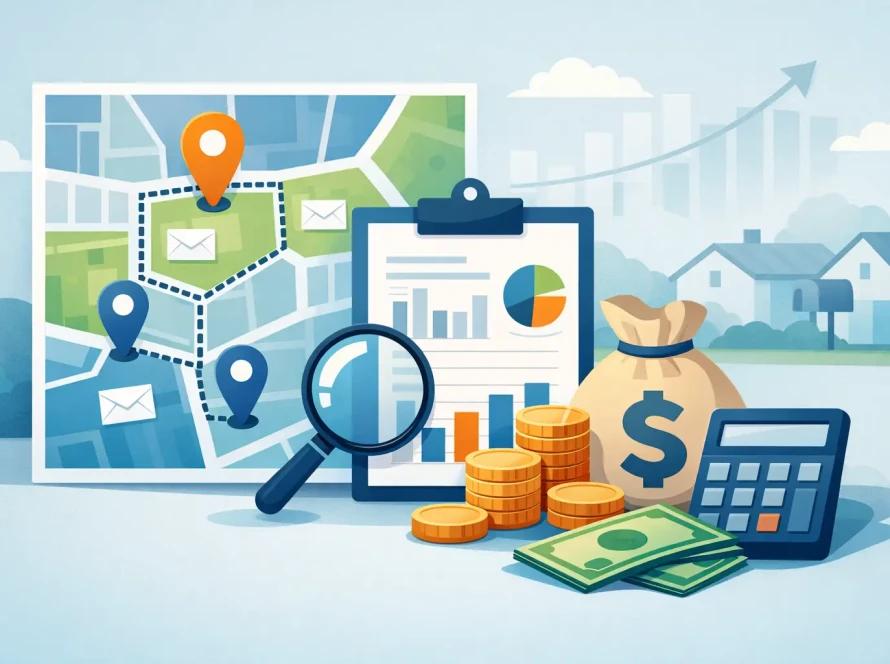
Next, consider the route count. EDDM can cover a few hundred addresses or thousands of homes across multiple routes. A larger postcard may be worthwhile in a tightly selected neighborhood with high customer value. For broader coverage, a smaller piece can preserve more of the budget for repeat mailings. Frequency matters because many local customers need to see a business more than once before they respond.
Also think about what will be on the piece. If you need a large QR code, coupon, menu preview, event details, service list, or photography, make sure there is room for each element to be readable. A small postcard with tiny type does not save money if recipients cannot understand the offer.
Design rules that protect your EDDM investment
Your design should guide the eye quickly. Lead with a headline that tells people what you do or what they get. Follow it with a visible offer, a clear deadline when appropriate, and one primary call to action. Phone calls, website visits, walk-ins, and QR code scans can all work, but asking a recipient to do too many things weakens the message.
Keep the most important information away from trim edges and the mailing panel. Include bleed where needed so background colors and images print cleanly to the edge. Use high-resolution images, readable type, and enough contrast for a recipient to understand the postcard without effort.
A strong front side often focuses on attention and value. The reverse side can provide supporting details, service areas, testimonials, offer terms, and mailing information. That division gives the postcard a natural flow while keeping the design organized.
Paper stock, coating, and weight considerations
Paper affects how your EDDM postcard feels before anyone reads it. A heavier cover stock can communicate quality and hold up well in the mail, while a lighter stock may reduce costs for high-volume distribution. Glossy coating can make product photography and bright color pop. Matte or uncoated finishes can feel more refined and are often easier to write on if the piece includes an appointment reminder or response area.
Your paper choice must still meet USPS thickness and weight requirements. Large formats, extra-heavy stocks, and added treatments can change the final mailability of the piece. This is where working with a print and mailing partner is valuable: the file, finished size, stock, postage, and route preparation should be reviewed as one campaign, not as separate tasks.
Plan your route and format together
EDDM is most effective when the route selection matches the offer. A family restaurant may focus on nearby residential routes. A roofing contractor may target neighborhoods with older homes. A business-to-business service may select routes that include commercial delivery points. The postcard size should support that strategy, not replace it.
Before printing, review your route count, mail date, budget, offer, and response tracking method. Use a dedicated phone number, landing page, QR code, coupon code, or intake question so you know what the campaign produces. That information helps you decide whether to repeat the same size, test a larger format, or improve the offer for the next drop.
Pink Hippo can help bring those moving parts together, from print-ready artwork and postcard production to mailing support for a campaign that needs to hit the right neighborhoods on time.
The best EDDM size is the one that gives your offer enough room, fits your route budget, and makes a local customer stop before tossing the mail. Choose the format with a purpose, keep the message clear, and give your campaign a reason to be remembered.