A postcard does not have to compete with every message in a crowded inbox. It gets picked up, carried into the kitchen, pinned to a bulletin board, or handed to someone else in the office. That physical presence is why direct mail marketing trends continue to matter for businesses that need to reach real neighborhoods, promote a timely offer, and generate leads they can act on.
The strongest mail campaigns are no longer built around sending the biggest possible quantity. They pair smart targeting, an easy response path, and print that gives people a reason to pay attention. For local service businesses, real estate professionals, retailers, healthcare offices, and growing marketing teams, the goal is simple: put the right message in front of the right households without making the campaign difficult to run.
Direct Mail Marketing Trends Worth Using
1. Neighborhood targeting is getting more strategic
Local reach remains one of direct mail’s biggest advantages, especially when a business serves a defined area. Every Door Direct Mail, often called EDDM, lets businesses choose postal routes rather than purchase a traditional mailing list. That makes it a practical fit for restaurants, home service companies, fitness studios, local retailers, political campaigns, and new locations looking to build awareness nearby.
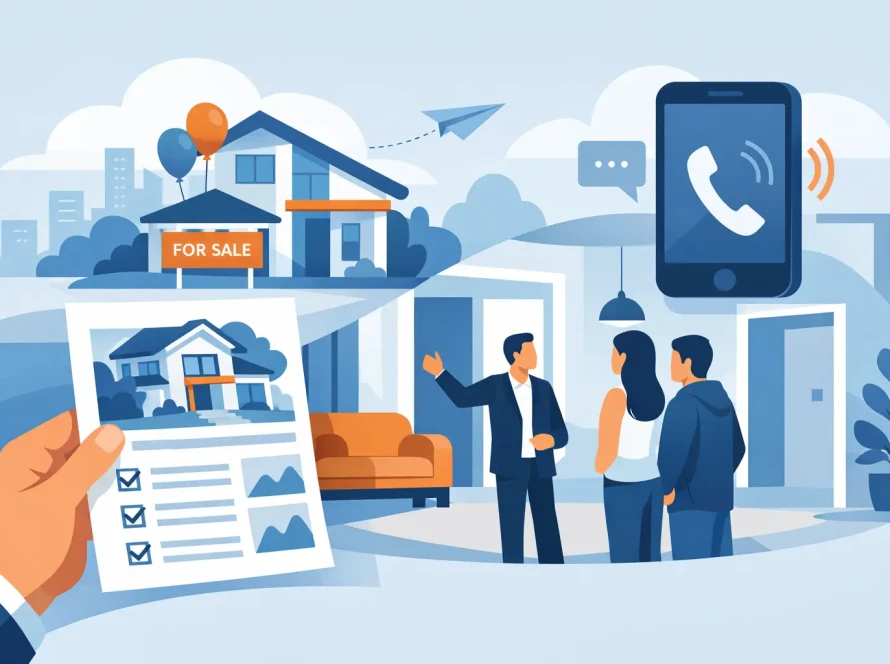
The trend is not simply mailing every route around a business address. Marketers are looking at the service radius, nearby competitor locations, household density, property types, and the neighborhoods most likely to need the offer. A roofing company may focus on older neighborhoods after a storm season. A real estate agent may select routes near an open house or a recently sold property. A daycare may mail routes close to large residential communities and commuter corridors.
More targeted geography usually beats a broader, less relevant drop. It can also make creative easier: instead of a generic message, the mailer can speak to a specific local need.
2. Postcards are becoming more offer-focused
Beautiful design matters, but a postcard still needs to earn a response quickly. Current direct mail campaigns are moving away from vague brand statements and toward clear, immediate offers. Think seasonal service specials, consultation invitations, grand opening promotions, move-in packages, limited-time discounts, or a free estimate.
The best offer depends on the sales cycle. A restaurant can use an expiration date and a coupon code. A contractor may get better results with a strong call to schedule an inspection. A financial professional might offer a useful guide or a short consultation. The right choice is the one that feels valuable enough for the recipient to respond without giving away more margin than the business can support.
Keep the front of the card focused. One headline, one benefit, and one visual idea are often enough. The back can carry the details, service area, contact information, and response options. When every inch tries to say something different, the message gets lost.
3. QR codes are connecting print to digital follow-up
A QR code is no longer a novelty on direct mail. It is a useful bridge between a printed piece and a landing page, booking form, menu, property listing, or special offer. The key is giving people a clear reason to scan it.
“Scan for 15% off your first service” is stronger than “Scan to learn more.” A real estate postcard might send recipients to a property tour. A medical office can send them to an appointment request form. An event mailer can open a registration page. The destination should match the message on the mailer exactly and work well on a phone.
QR codes also make campaigns easier to evaluate. A unique code or campaign-specific landing page can show which mail drop generated visits and inquiries. That does not capture every response, because some people will call, search the business name, or visit later. Still, it gives teams a useful signal and helps them improve the next mailing.
4. Variable messaging is making mail feel more relevant
Personalization does not always mean putting a recipient’s first name in large type. For many local campaigns, relevance comes from adjusting the message based on location, customer type, or stage in the buying process.
For example, a landscaping company can use different seasonal services for current customers and new prospects. A multi-location retailer can feature the closest store. A nonprofit can tailor its appeal to past donors versus households that have not given before. When a campaign uses a mailing list, variable data printing can support these kinds of changes without creating separate production headaches for every version.
There is a trade-off. More versions require better data, more careful proofing, and a clear plan for what changes from piece to piece. If the data is incomplete or the message is nearly identical, a single strong version may be the smarter choice. Personalization should improve the recipient’s experience, not add complexity for its own sake.
5. Dimensional elements are being used selectively
Standard postcards remain popular because they are cost-effective, fast to produce, and easy to distribute. But when the audience is smaller or the lifetime value of a lead is higher, marketers are adding tactile details that make mail feel more substantial. Thicker stocks, soft-touch finishes, oversized cards, folded self-mailers, custom shapes, and handwritten-style fonts can all create a stronger first impression.
This is not a case where more expensive automatically means better. A premium finish can be a smart investment for a high-end home builder, luxury real estate agent, or professional firm. For a high-volume local promotion, a well-designed standard postcard may deliver better economics. The format should support the campaign objective, audience, and budget.
6. Direct mail is working alongside other channels
Mail performs best when it has a job within a larger marketing plan. A postcard can introduce an offer before a digital ad appears, reinforce an email message, or give a sales team a reason to follow up with local prospects. This coordinated approach helps businesses show up in more than one place without repeating the same message word for word.
A practical example: a home services company mails a postcard to selected neighborhoods, runs matching local social ads during the same two-week period, and prepares its call team with the same offer and expiration date. The prospect sees a consistent message, while the business creates several ways to respond.
Timing matters here. A mail piece needs production and postal delivery time, so it should be planned around the actual event, sale, season, or service window. Last-minute campaigns are possible, but they leave less room for thoughtful targeting, proof approval, and coordinated follow-up.
7. Measurement is becoming part of the creative process
For years, businesses often treated direct mail results as difficult to track. That is changing because mailers can now build measurement into the piece from the start. Unique phone numbers, promo codes, QR codes, dedicated web pages, offer-specific forms, and simple “bring this card in” redemptions all provide ways to connect responses to a campaign.
Choose one primary action before design begins. If the goal is calls, make the phone number prominent and train staff to ask how the caller heard about the business. If the goal is online booking, lead with the QR code and landing page. If the goal is store traffic, use a redeemable offer that gives customers a reason to bring the mailer along.
Then look beyond the response rate alone. Consider the number of qualified leads, booked appointments, redeemed offers, average sale value, and repeat business. A campaign that brings in fewer leads may still be the better campaign if those leads turn into higher-value customers.
How to Put These Trends Into a Better Mail Campaign
Start with a specific business goal. “Get more customers” is too broad to guide design or targeting. “Book 25 HVAC tune-ups before summer” or “promote an open house to five nearby carrier routes” gives the campaign a clear purpose.
Next, match the audience to the offer. EDDM can be an efficient choice when geography is the priority and a business wants broad neighborhood visibility. A targeted list campaign may be a better fit when the message depends on customer history, household characteristics, or a highly defined prospect profile. Both approaches can work well, but they solve different problems.
Finally, make response easy. Use a readable headline, a visible call to action, accurate contact details, and a design that looks professional in the recipient’s hand. Before printing, review the proof carefully for dates, pricing, service areas, QR code destinations, and postal requirements. Small mistakes are costly once a campaign is in motion.
When you need help bringing the pieces together, Pink Hippo can support the design execution, print production, and mailing details that keep a local campaign moving. The most effective next mailer is usually not the flashiest one. It is the one that reaches a defined audience, makes a believable offer, and gives people a simple reason to respond.