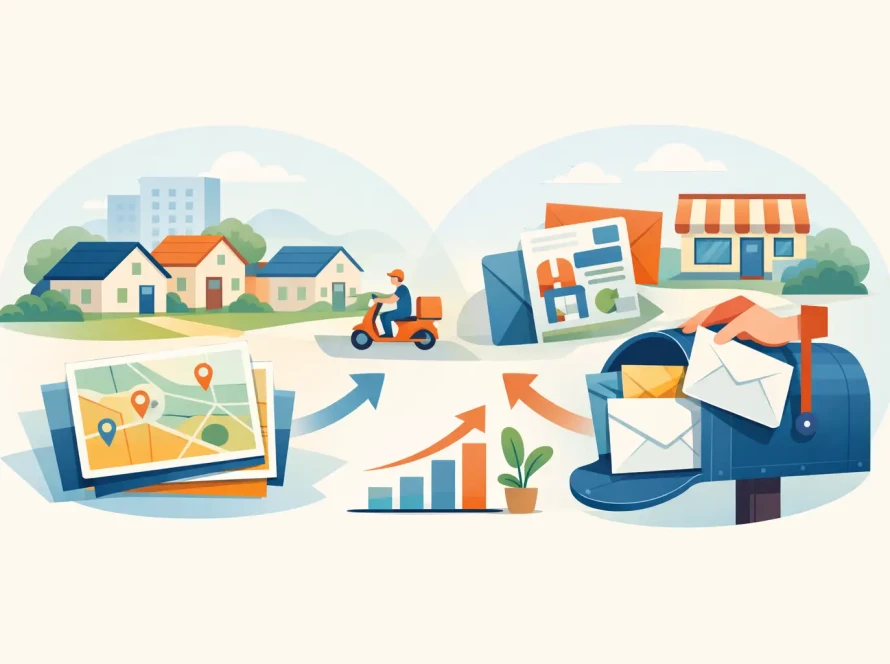
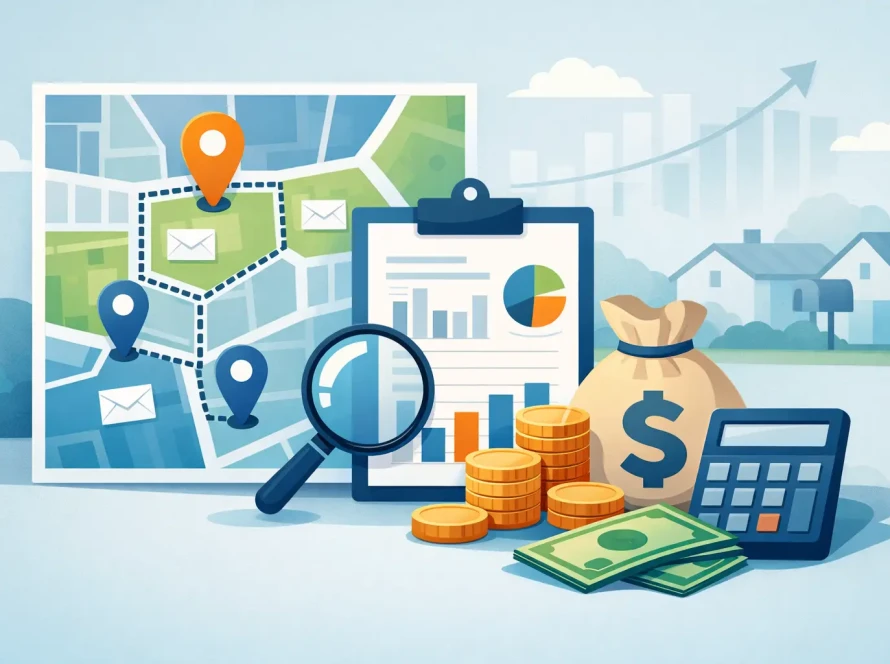
A homeowner may not need a plumber, HVAC technician, roofer, or landscaper the day your mail piece arrives. But when the water heater fails, the air conditioner stops cooling, or the yard needs attention before guests arrive, they remember the company that showed up in their mailbox. That is what makes mailers for home services valuable: they build local familiarity before the urgent call comes in.
For service businesses, direct mail works best when it is treated as a neighborhood growth tool, not a one-time blast. The right offer, audience, format, and follow-up can help turn a printed piece into scheduled appointments, estimates, and repeat customers.
Why Home Service Mailers Still Get Attention
Home services are local by nature. A homeowner wants a provider who serves their area, understands local housing needs, and can get there when needed. A well-planned mail campaign puts your name in front of the households most likely to need you without requiring them to search for you first.
Unlike a social post that can disappear in seconds, a postcard or folded mailer has a physical presence. It can land on the kitchen counter, get pinned to a bulletin board, or sit near the front door until the timing is right. That visibility matters for services with longer buying cycles, such as roofing, remodeling, lawn care, pest control, and exterior cleaning.
Direct mail is not a replacement for digital marketing. It is a strong complement to it. A homeowner may see your postcard, search your company name later, read reviews, and then call. The mailer created the first impression, while your website, online listings, and phone experience help close the job.
Start With One Clear Service Goal
The most effective mailers do not try to sell every service you offer in one crowded space. A heating and cooling company may offer maintenance, repairs, replacements, duct cleaning, and indoor air quality products. That does not mean every campaign should mention all of them.
Choose a goal based on the season, your capacity, and the customers you want more of. Spring can be a practical time for AC tune-ups, lawn care packages, gutter cleaning, and pest prevention. Fall often creates opportunities for furnace inspections, leaf removal, chimney service, and weatherization. After a major local storm, roof repair, tree work, restoration, and exterior services may be more relevant.
A focused message gives homeowners an easy decision. Instead of saying, “We do it all,” lead with a specific reason to respond: “Schedule your furnace tune-up before cold weather,” or “Get a free roof inspection after recent storms.” Support that message with a short explanation of what makes your business the right choice.
The offer should match the job economics. A discounted first mowing may make sense for a lawn company that can retain customers for a full season. A free inspection may be better for a roofer, where the value is in identifying qualified projects. For emergency repair businesses, a fast-response promise may be more persuasive than a discount.
Build Mailers for Home Services Around Trust
Inviting a company into a home requires trust. Your mailer should answer the questions homeowners ask, often before they ever call: Do you serve my neighborhood? Are you qualified? Can I reach a real person? Will the price be clear? Can you get the job done?
Use your business name, logo, phone number, website address, and service area prominently. If you have credentials, years in business, licensed and insured status, financing availability, or a meaningful guarantee, include the details that matter most. Do not fill the piece with every badge or claim you have. A clean layout with a few credible proof points is easier to scan.
Photos can help when they show real work, recognizable team members, or a clear before-and-after result. Stock imagery is sometimes appropriate, but it rarely carries the same local credibility as an actual project photo. For remodeling, landscaping, roofing, and cleaning services, visual proof can do a lot of the selling.
Your call to action should be impossible to miss. Tell the recipient exactly what to do next: call for an estimate, schedule online, request a seasonal service visit, or bring the mailer to receive an offer. Repeating the phone number and call to action can be useful, especially on postcard designs where people may only glance at one side.
Pick a Format That Fits the Campaign
A postcard is often the best starting point for a local home service campaign. It is immediate, easy to read, and well suited to one offer. Larger postcards give you more room for project photos, service details, testimonials, and a stronger visual presence.
Folded mailers can work well when the decision requires more education. A remodeling contractor may need room to show project categories, a process overview, and several examples. A pest control company may want to explain treatment plans or seasonal pest risks. More space is useful only when the content earns it. If the message is simple, a postcard is usually the faster read.
An envelope package can feel more personal and may be appropriate for higher-value services, membership renewals, or past-customer reactivation. It also costs more to produce and requires a stronger reason for the recipient to open it. Format is not just a design decision. It is a budget and response strategy decision.
Paper stock and finishing matter too. A heavier postcard stock feels more substantial than a thin flyer, while a glossy finish can make vibrant project photography stand out. Matte finishes can give premium services a more refined feel and are often easier to write on when you want recipients to save an appointment reminder or coupon.
Target the Right Neighborhoods
A great offer mailed to the wrong households is still wasted budget. Start by looking at where your best customers live. Consider average home value, home age, property type, household density, and the distance from your service area. The right audience for a weekly lawn service may be different from the right audience for a full kitchen renovation.
Older neighborhoods can be productive for HVAC replacement, plumbing upgrades, electrical work, roofing, and insulation. Newer developments may be a better match for landscaping, window treatments, fencing, and recurring cleaning. This is not a hard rule. Your existing customer data should always carry more weight than broad assumptions.
Every Door Direct Mail, commonly called EDDM, can be a practical option when you want broad neighborhood coverage without building a traditional mailing list. It works especially well for businesses that serve defined local routes and want to introduce themselves across a nearby community. Targeted mailing lists can be a better fit when you need to reach specific homeowner profiles, past customers, or tightly defined service areas.
For many campaigns, the answer is a mix. Use EDDM to build awareness in promising neighborhoods, then use targeted follow-up mail for estimates, seasonal reminders, and customer retention.
Make Timing and Frequency Work Together
One mailer can create calls, but repetition builds recognition. Homeowners often need several impressions before they respond, particularly for services they do not need immediately. A consistent campaign also makes your business look established and active in the area.
That does not mean sending the same postcard every month. Keep your branding consistent while changing the seasonal reason to act. A plumbing company might promote drain maintenance in early spring, outdoor faucet checks before winter, and priority service plans throughout the year. A landscaping company can move from spring cleanup to mowing, irrigation, fall cleanup, and snow services where relevant.
Plan around your operations. Do not run an aggressive promotion for a service your team cannot schedule promptly. Response is good, but a long delay, missed calls, or unclear availability can damage the confidence your mailer created. If you are entering a busy period, promote services with available crews or set realistic booking windows.
Track What Produces Real Jobs
Mail campaigns deserve more than a vague sense that “the phone rang more.” Use a dedicated offer code, campaign-specific phone number, unique landing page, or a simple question for your office team: “Which postcard did you receive?” The tracking method does not have to be complicated. It just needs to be used consistently.
Measure calls, booked appointments, completed estimates, closed jobs, and revenue. Also look at average job value and customer lifetime value. A campaign that generates fewer calls but produces larger, profitable projects may outperform a high-response discount offer that attracts one-time bargain shoppers.
Keep notes on the neighborhood, mail date, offer, format, and quantity. After a few campaigns, patterns become easier to see. You may find that certain postal routes produce better estimates, that oversized postcards earn stronger visibility, or that a maintenance offer produces more long-term value than a percentage-off promotion.
Make Execution Easy Without Looking Generic
Home service owners have enough to manage without coordinating separate designers, printers, mailing vendors, and post office requirements. Working with a print and direct mail partner can simplify the process from artwork through delivery, while giving you support when a campaign needs more than an online template.
At Pink Hippo, that can mean bringing together custom print production, mailing support, and EDDM execution for campaigns designed around your local market. Before printing, review your phone number, offer dates, service area, licensing language, and mail panel details carefully. Quality control is a small step that protects the budget you are putting behind the campaign.
The best home service mailer feels useful, local, and easy to act on. Give homeowners a clear reason to keep it nearby, then be ready to deliver the same professionalism when they call.